SOPHIE SCHWEIGHART
I am an artist working across media art, installation, technology, and film. My practice is rooted in a sustained investigation into the psychological effects of digital systems on identity, intimacy, and human relationships. I examine how surveillance structures and digital environments reshape the ways people observe, perform, and relate to one another, exploring the tension between intimacy and public exposure. Central to my work is a deep engagement with the sociological and philosophical implications of emerging technologies: questions of agency, control, emotional authenticity, and the boundaries of the self in an age of intelligent machines.
My recent practice operates at the boundary between digital and physical existence, from rematerializing industrial datasets into sculptural form to developing autonomous AI systems trained on personal memory, investigating what emerges when creativity and selfhood arise from the recursive processing of biographical data.
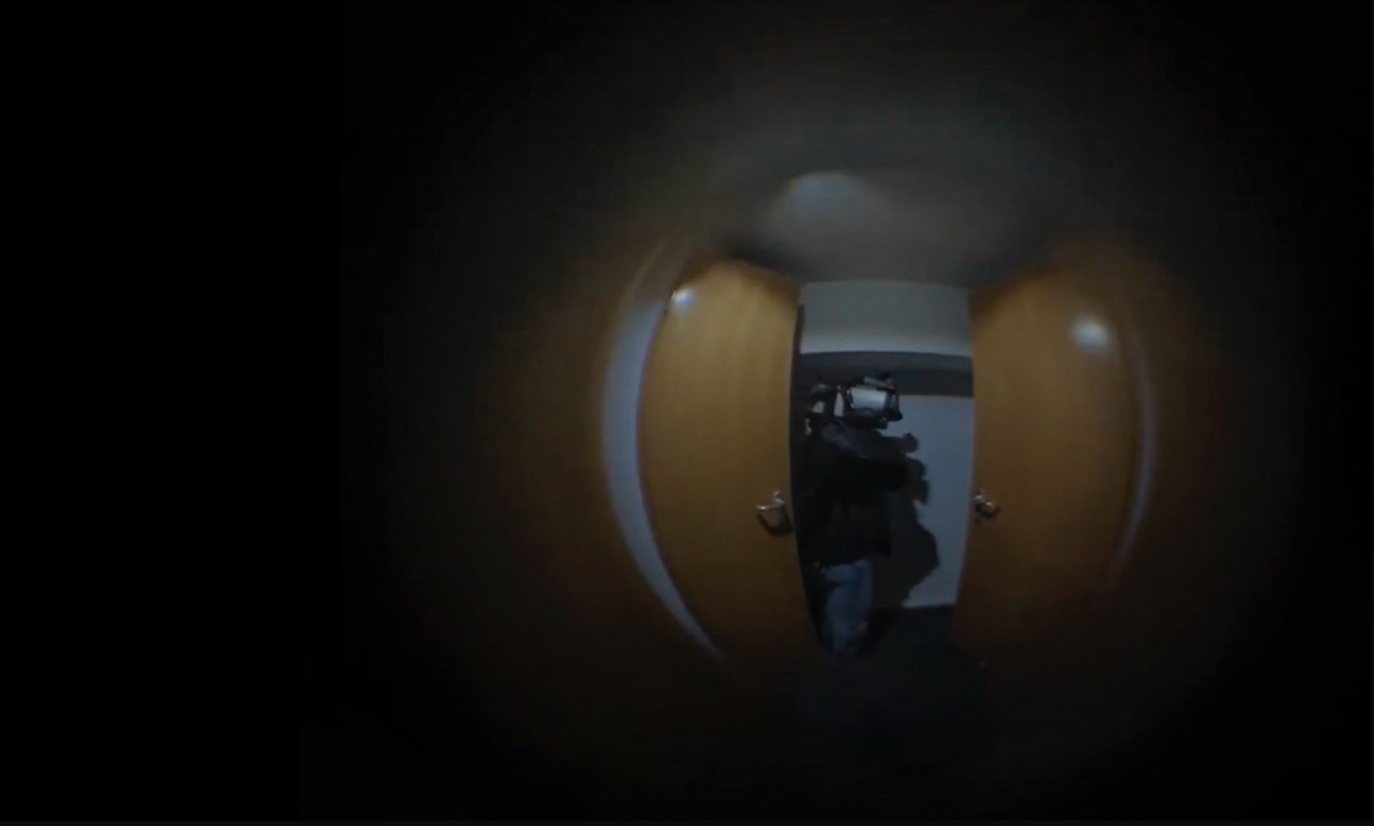
Rather than producing discrete objects, I stage complex spatial installations and scripted situations that fuse physical architecture with speculative, virtual layers. My interventions range from fully constructed rooms within rooms to minimal, non-physical gestures that exist only as constructed rumors or shifts in social dynamics. These environments function as psychological traps or protocol-like game systems, often involving live actors or overlapping regimes of mediation. Through these dramaturgical stagings and distortions of space, I generate states of hyperreality that unsettle perception and continuously dislocate the viewer's position within the work.
My works are contingent on direct encounter: they require physical presence and operate through embodied navigation of the exhibition space. What emerges is less a fixed piece than a temporally bound situation, co-produced by the mutual awareness between artwork, institutional architecture, and audience.
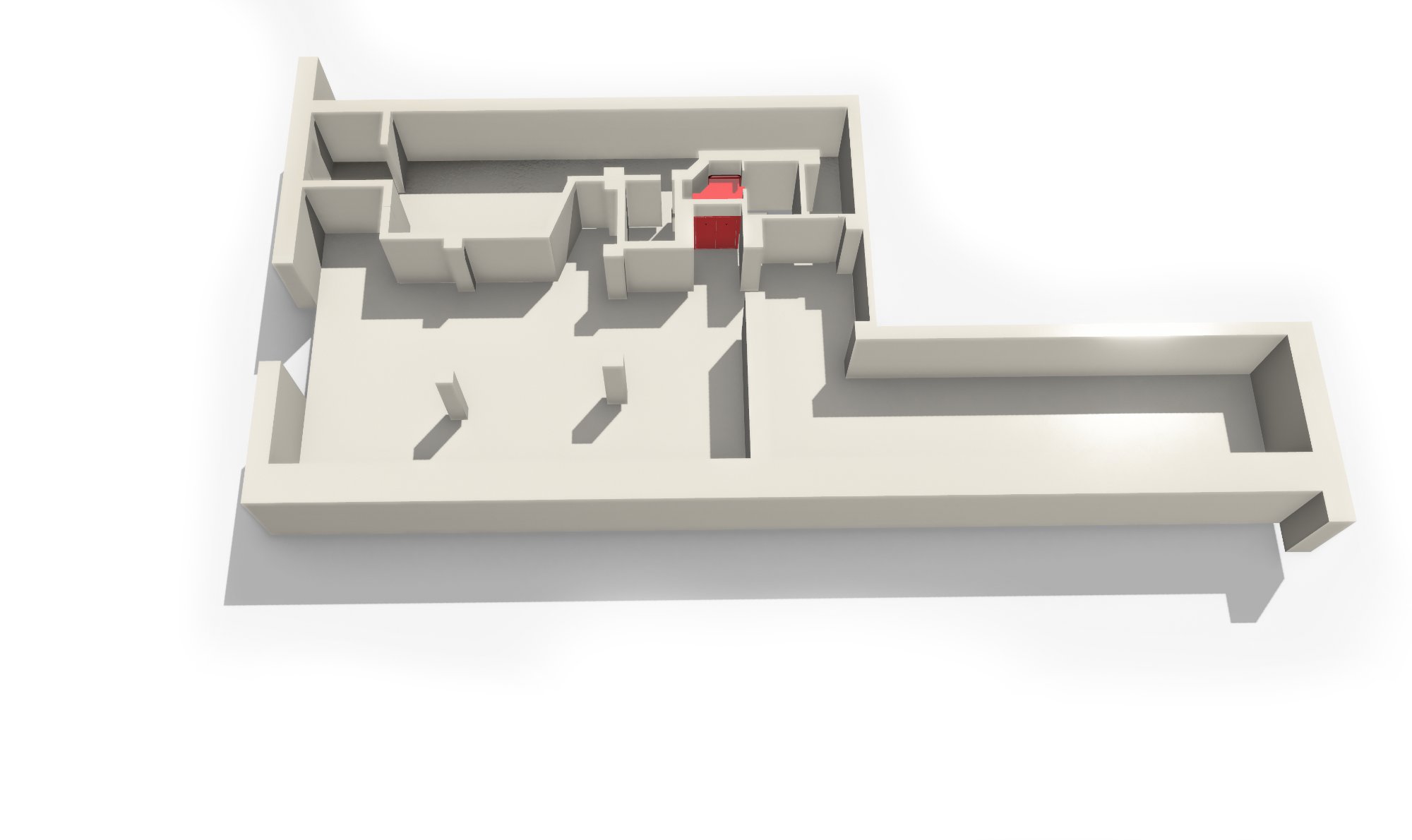
Pulp, Spatial Installation with Performance, 2m x 2m x 2.1m, Space Model, Westwerk Hamburg, Group Show Be Water My Friend
Fish-eye lens, yeast dough, fish oil capsules, gelatin.
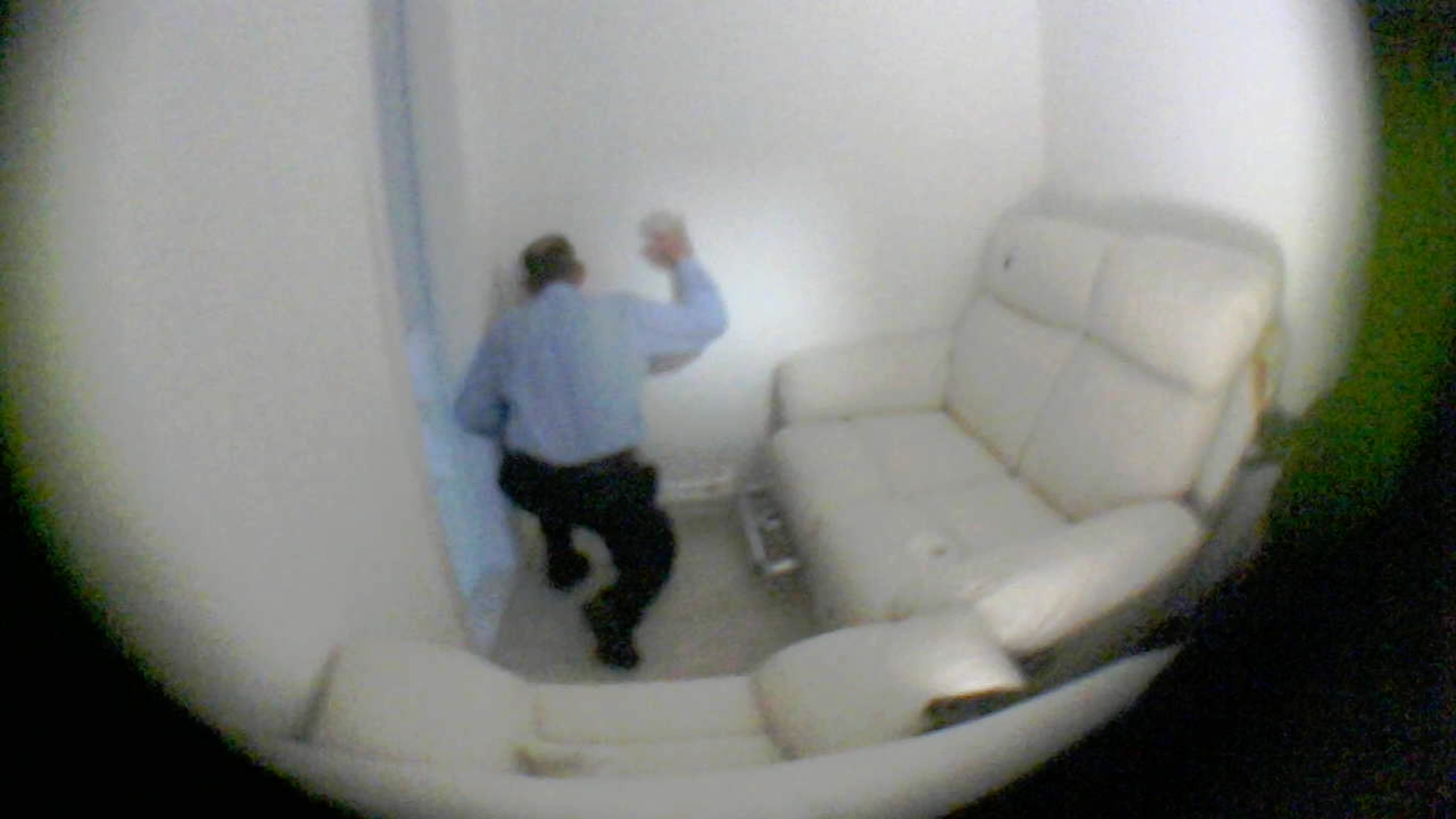
Installation with Performance, 200 x 200 x 120 cm. A room built into an elevator shaft. Fish-eye lens, yeast dough, various materials.
The performance took place in a specially constructed room, not accessible to visitors, and could be viewed through a fisheye lens embedded in the wall. During the six-hour performance, the performer was increasingly overwhelmed by the dough oozing from the walls and all objects.
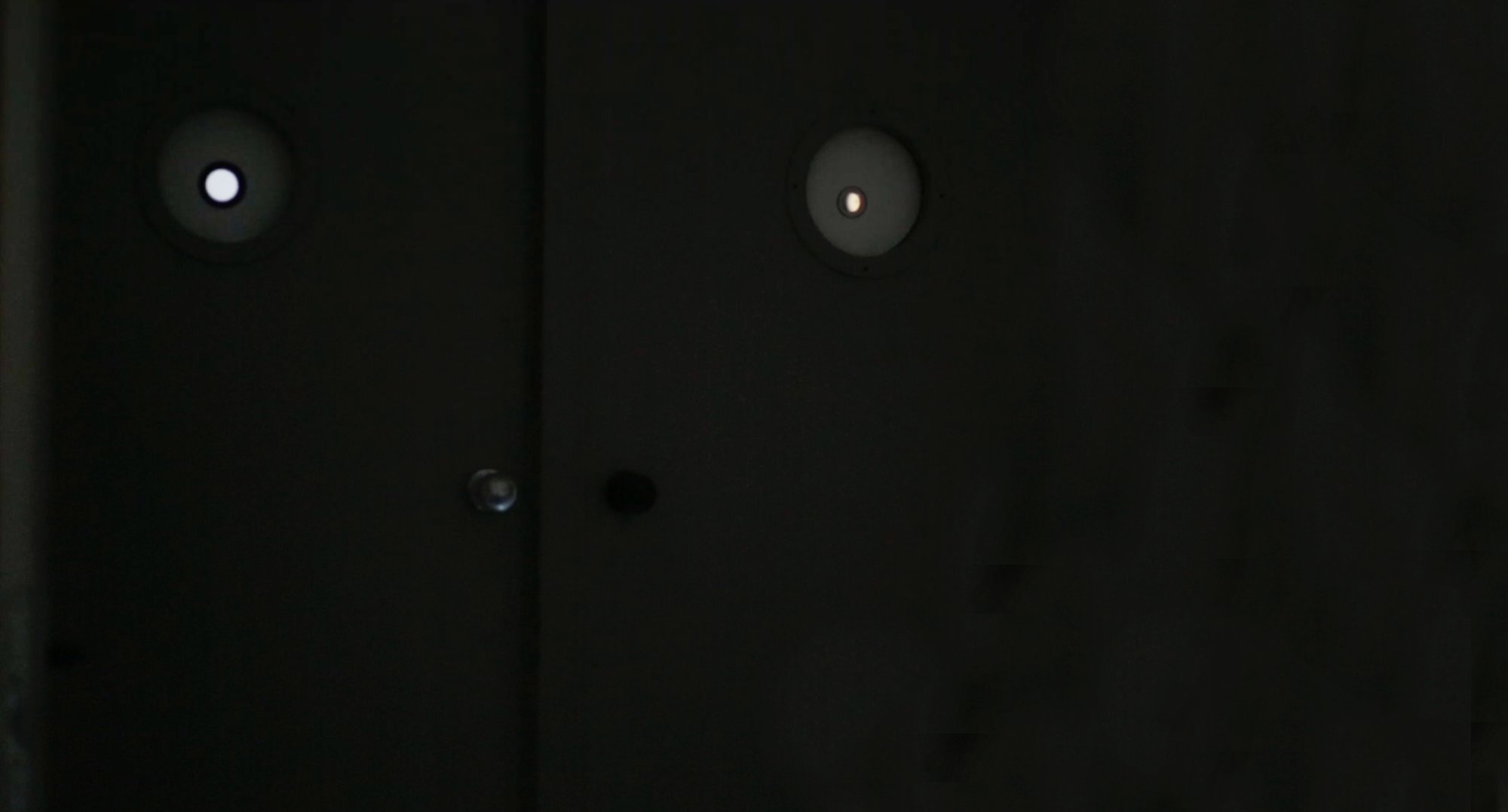
Exterior view: peepholes in wall
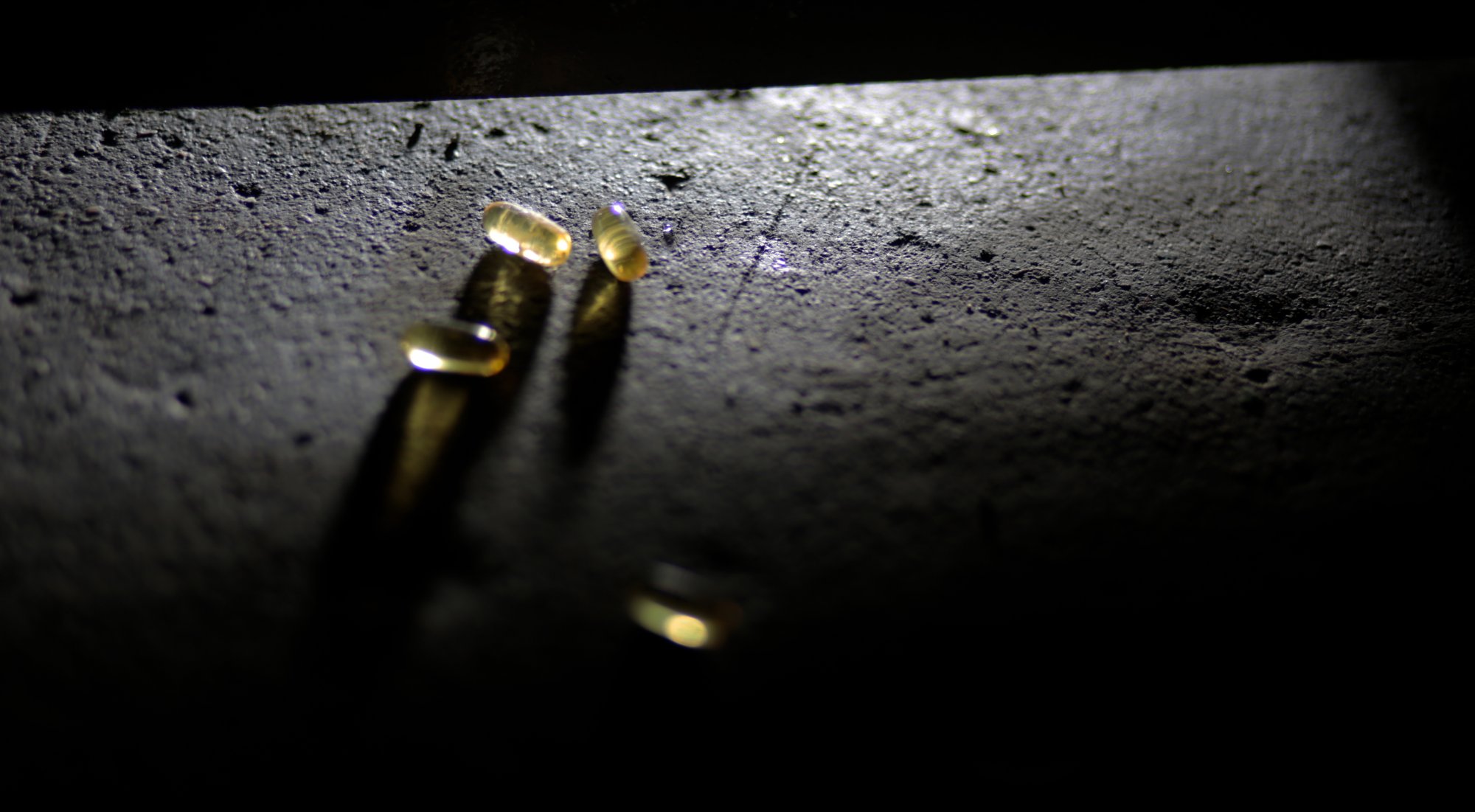
Fish oil capsules, detail
Pulp: the flesh that appears in front of a mediative door lens, the installation architectonics invite us to a blurred dream through the optics of a watcher, almost to serve as an eye witness of an ebullient mass that can be cut, wounded, lacerated, punched and penetrated, paradoxically by doing so, it increases in volume, as a revenge and a spectacle of its incommensurability.
Dripping cream yellow from the corners, displaying the obsolesce of the limits of its container. A persona on site transactioning, mediating and gathering the pulp, almost like a silent yearning uselessly craving for a cure, a remedy to the growth, like a minister, as a butcher, a baker, and a caretaker, inserting the capsules as a depiction of unrealized potential, inhabiting an alternate vacuum world, and its futility when preventing the growth of the pulp.
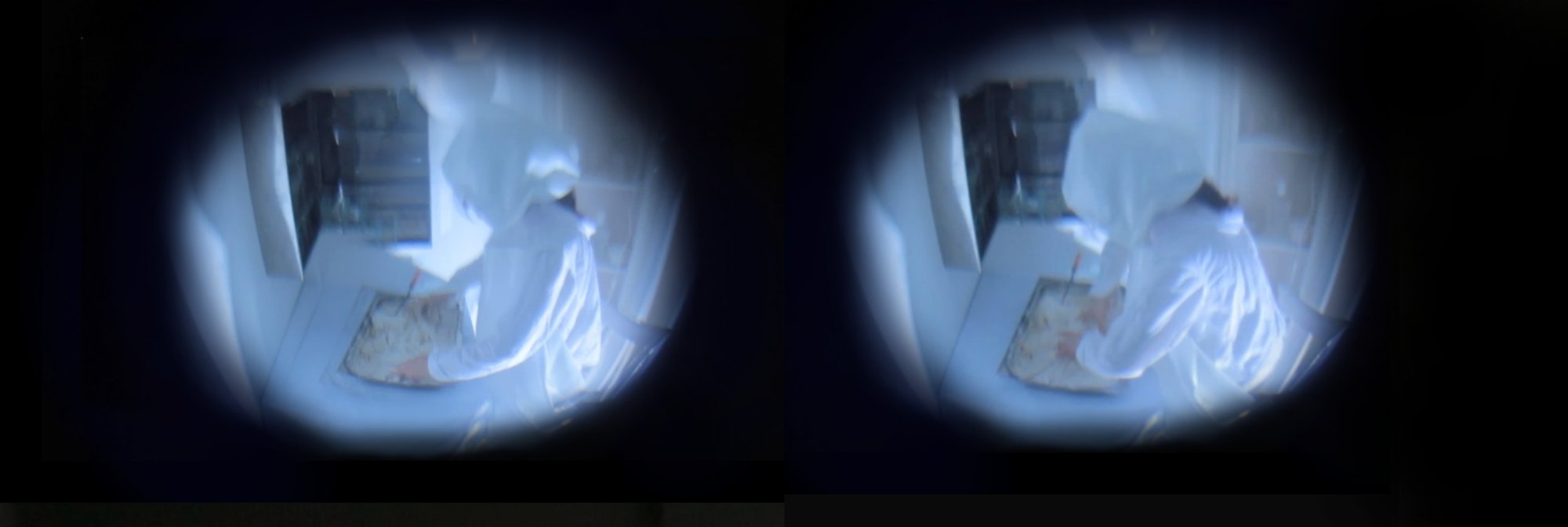
Double peephole view
The pulp that by itself is latent and has potential energy, to fill a room, by doing so, taking the life of it all in the space, to also rot and disclose its inner juices and mighty smells, to metastases and not looking back at us.
The pulp, an ivory body, balancing in rags and shelves, waiting to be processed by the minister, in moulding containers to be classified and archived in cupboards. The medicine that travel through canals, and cannulas attached to the flesh, meta-instruments like the mouth pressing to deliver the capsules, the duct to slide them through, as a preliminary gesture of penetration to unleash their realm of possibility with the dough.
Manure on cups, allegories of ammonia, cavity perspiration, roughly retaliating the inevitable truth: the powerlessness in one's agency to the expansion of the pulp, she merciless and accelerated, so dilated and ecstatic that exude warm self-immolation, that sparks a caliginous consideration about life and death.
Dichotomy in an inceptious mode, about the image (the icon) and the body (the index). We, the audience of this phenomenon, see through the glass inquiring for the stranger on the outside, of ourselves and our homes, we are on the inner side of the observing relationship, like when someone rings the bells on the outside. The outside is a relational map of a flourishing pulp, its minister and its instruments of remedy and laceration. What can we imagine more intimate and naked? One becomes a voyeurist of this catalyze, perhaps a believer or a canonist. What can we determine in this carcass of lumps? Is this a monster of humankind? Is it real in a different manner? We see it, but how can we know it?
We see this installation performance under the optics of a relational ethic that takes seriously the absent other, exploring the agency of creatures that trouble traditional understanding of what is considered to exist.
1. In the Company of Ghosts: Hauntology, Ethics, Digital Monsters by Line Henriksen, From the Belly of the Monster.
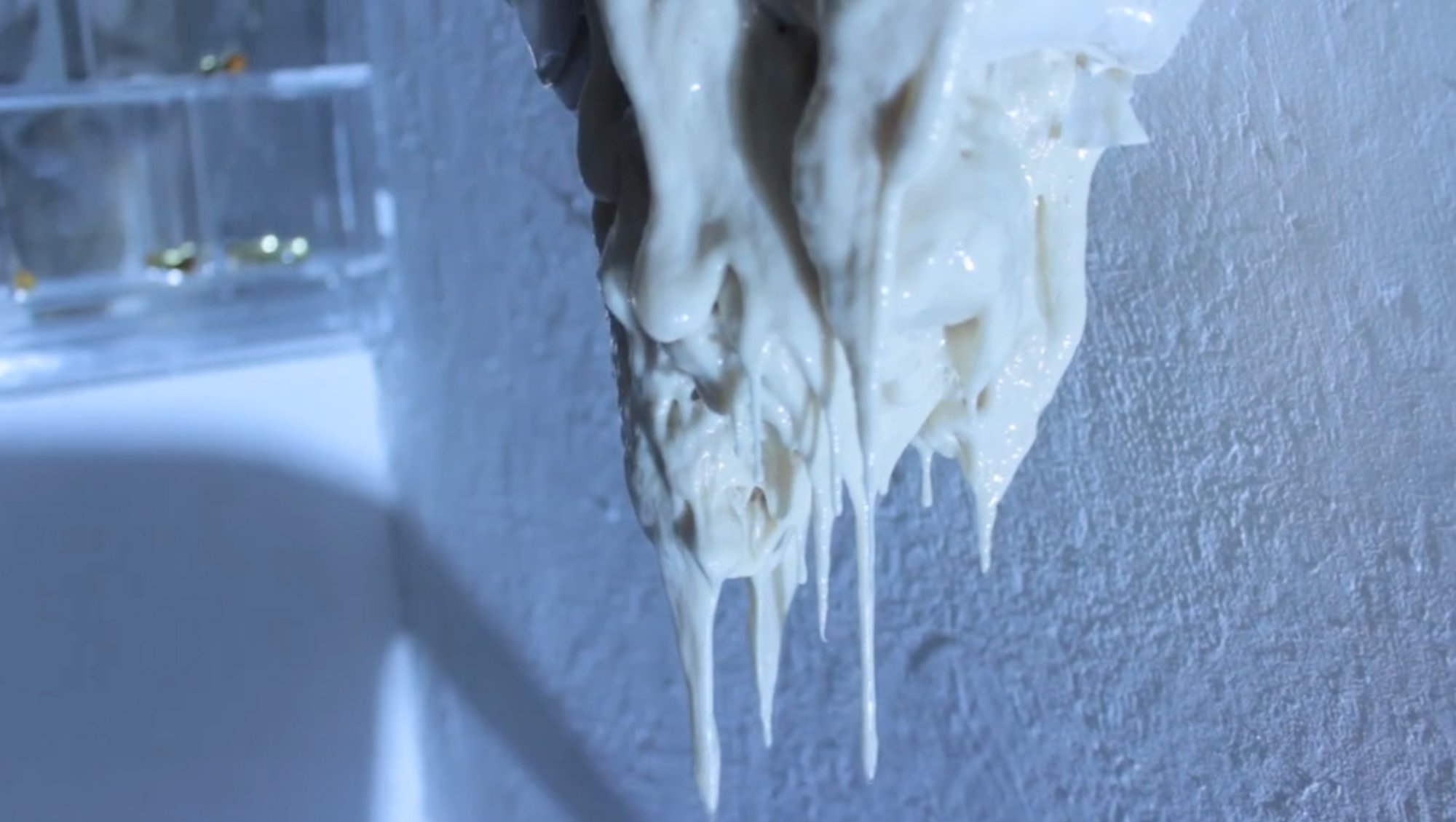
Material detail: growing formation
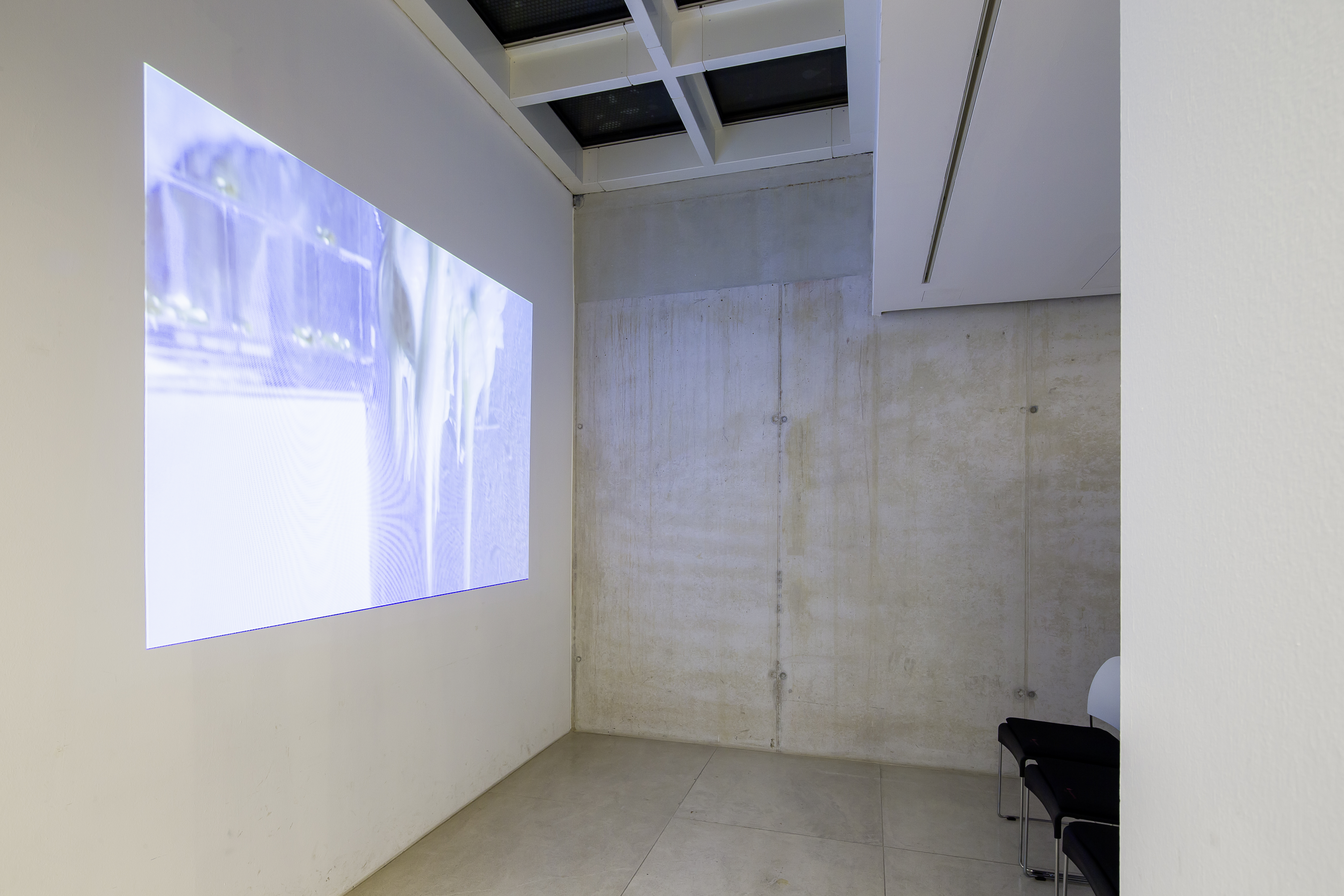
Documentation Pulp_Video_Max Ernst Museum Brühl des LVR, Brühl
Installation with Performance, 10 m x 5,4 m x 3,2 m
Rooms built into the space, cells of wax with walls of tallow, car seats, used oil tanks, milk, pipes docked to the pipes of the existing exhibition space, a shop window, a normal window, a convex lens, refrigerator parts assembled to form a large oversized refrigerator room, a puddle of motor oil with a reflection, cables eaten by rats.
A wall divides the exhibition space, separating the area accessible to visitors from the area where the performer works. This area is only accessible to one viewer at a time, through optical devices and in a specific position. The artist making subtle interventions. Visitors encounter strange pipe constructions that resemble blood vessels and electrical wires. A damaged pipe disrupts the entire system, causing a blockage on one side and a shutdown on the other.
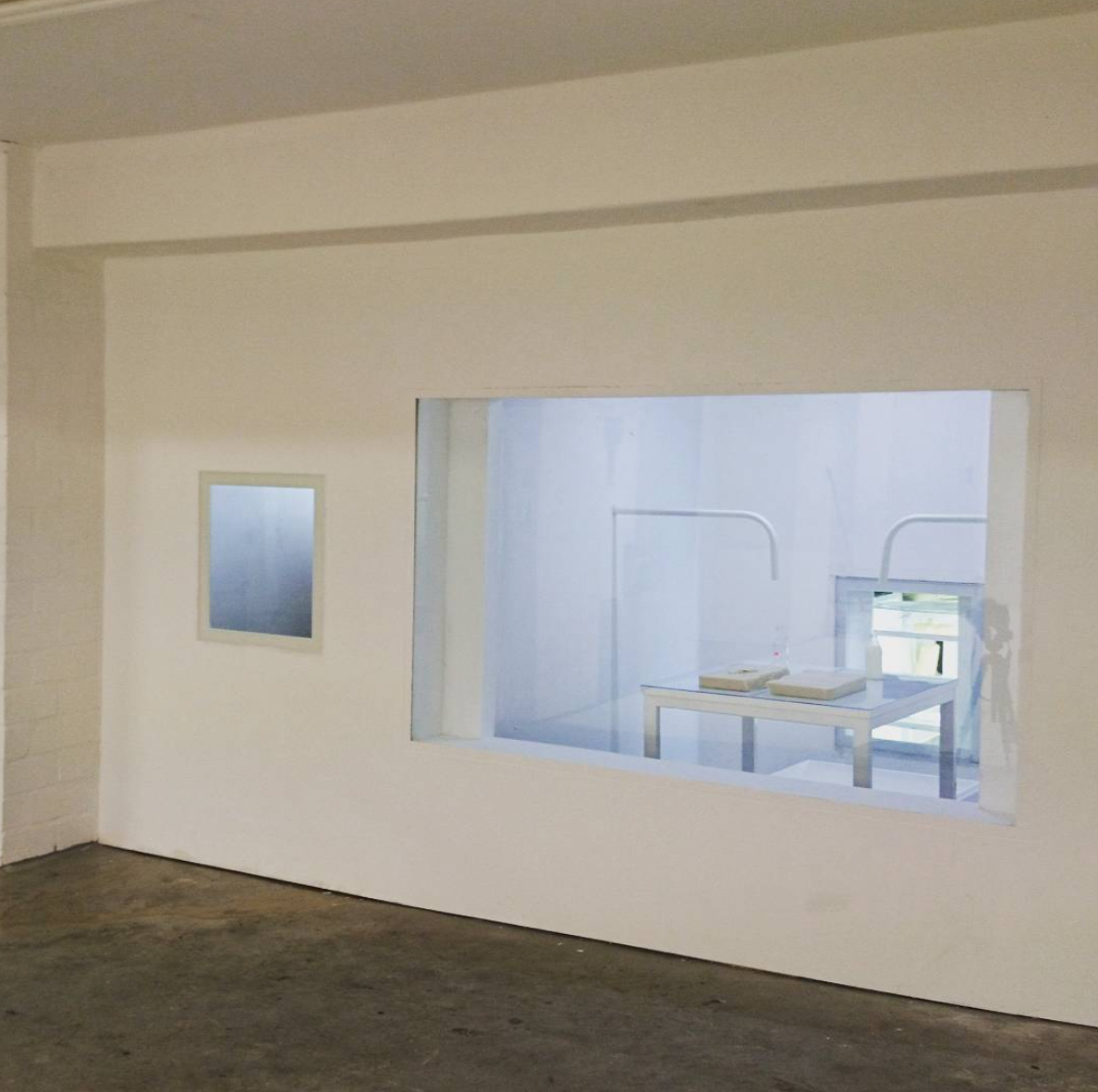
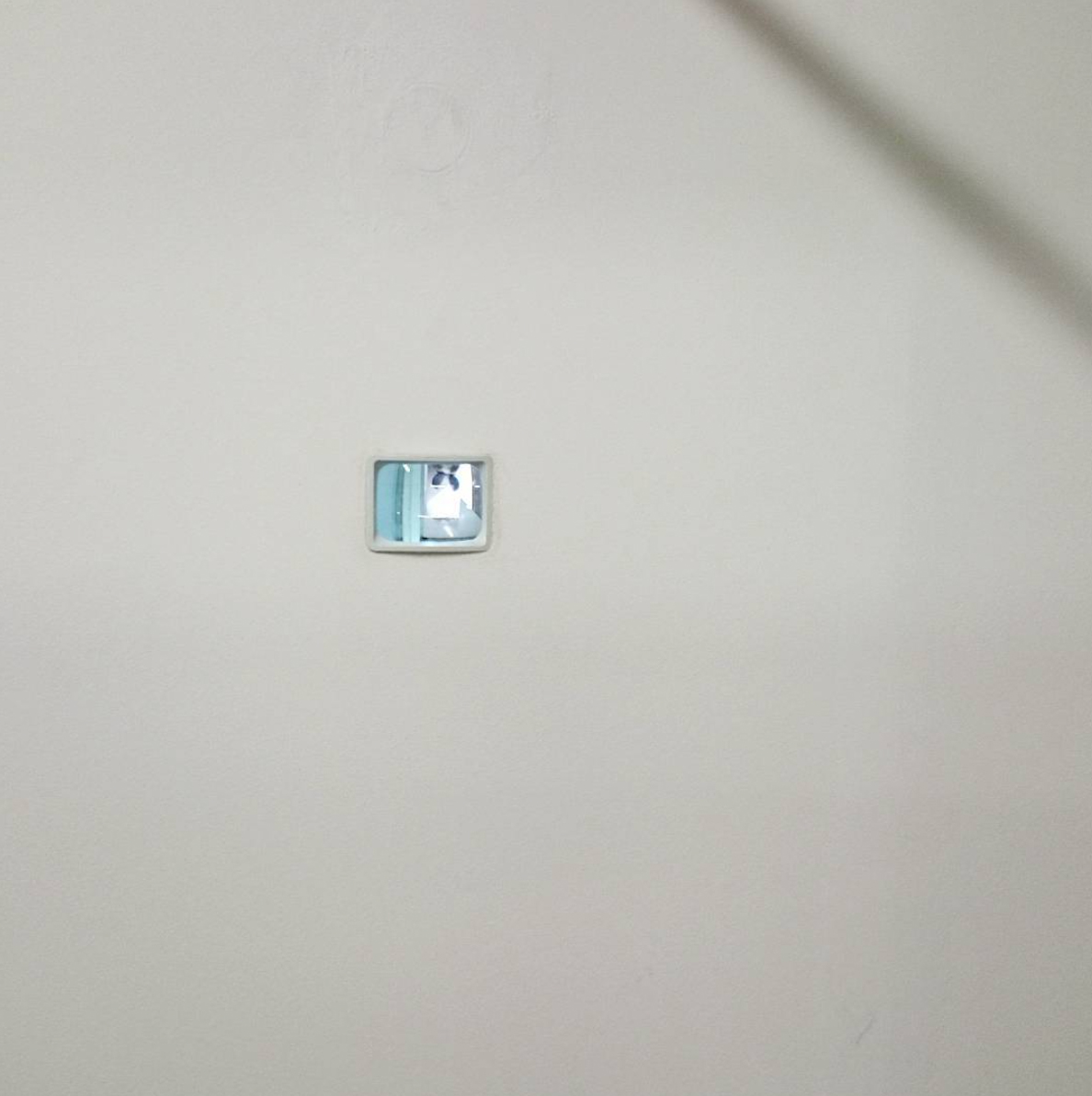
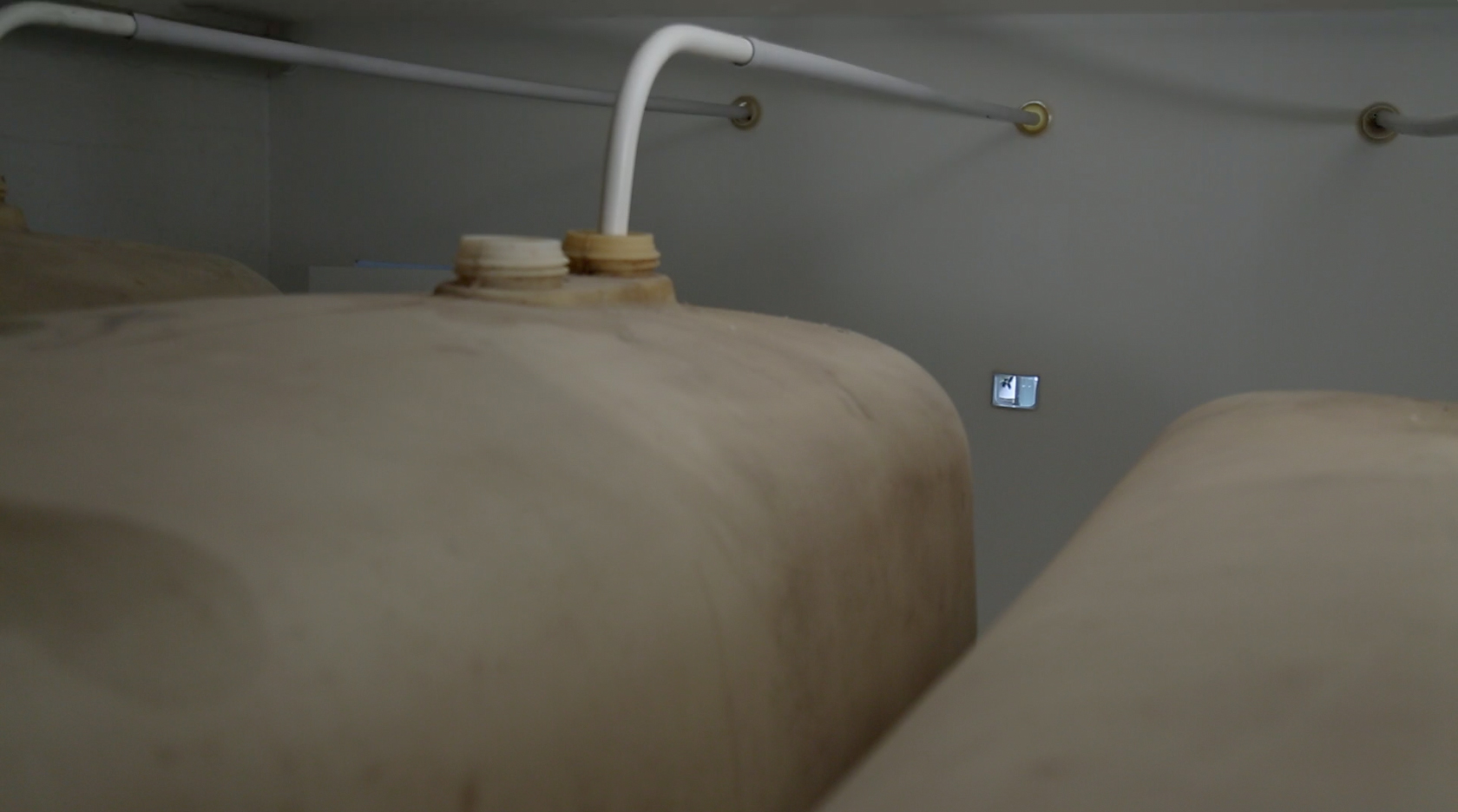
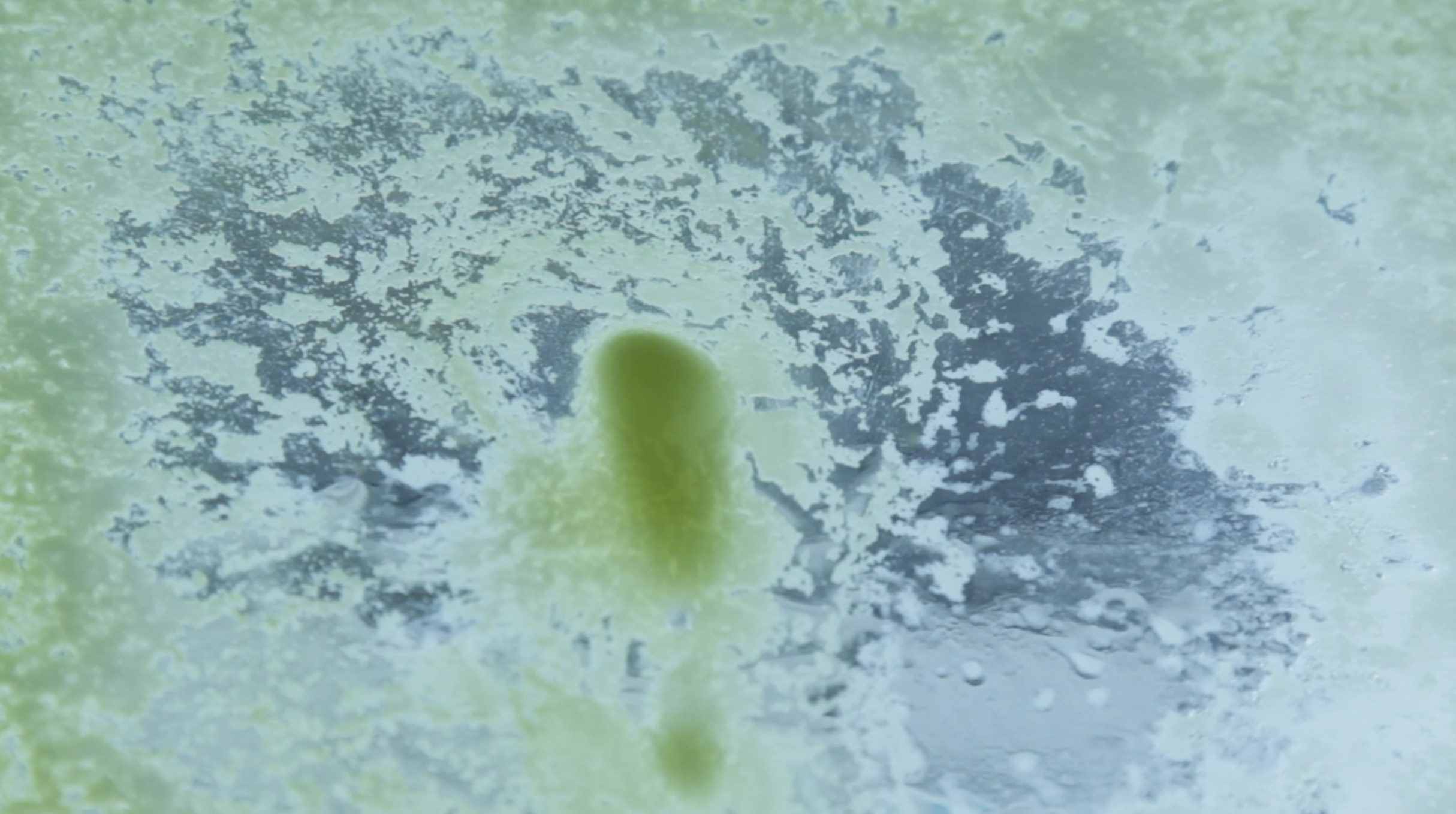
Thrombosis, installation views
Thrombosis, the clogged fluids, and systems, one get in motion to rule out their embolism, a worker in protection gear appears through the rectangular lens with a heat gun, melting the grease, ameliorating the pass to the next stage, they are chambers built out of these coagulum. The worker is stained with the fat, a constant liquefying and reducing action, to open pass through different capsules, meta-organs enclosed that reveal the inner communication and conduction. We have walked through the amber tanks, turning our bodies and minds to watch this scene upside down, as we can not access it more than though a vitrine, as walls stand in between.
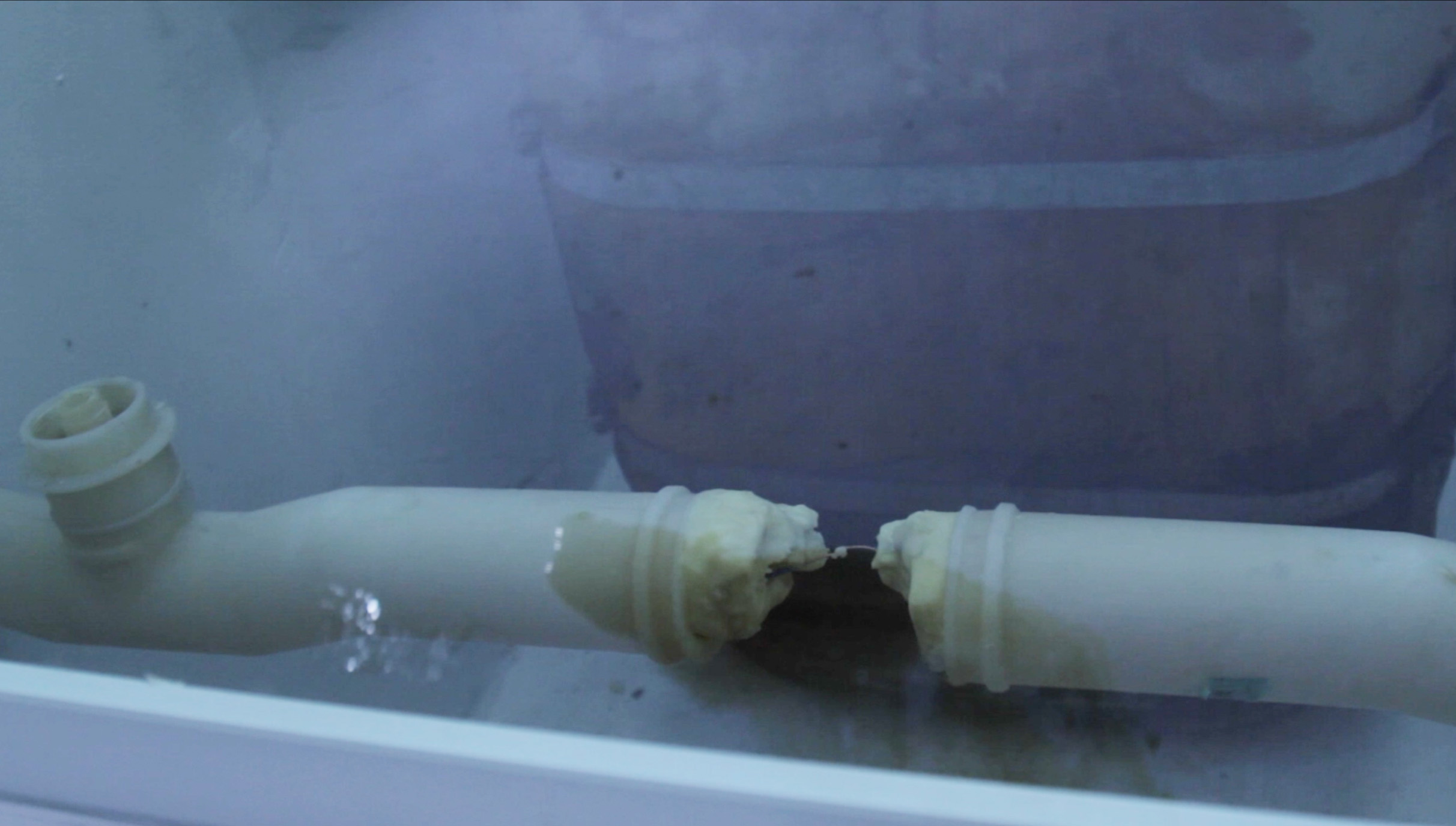
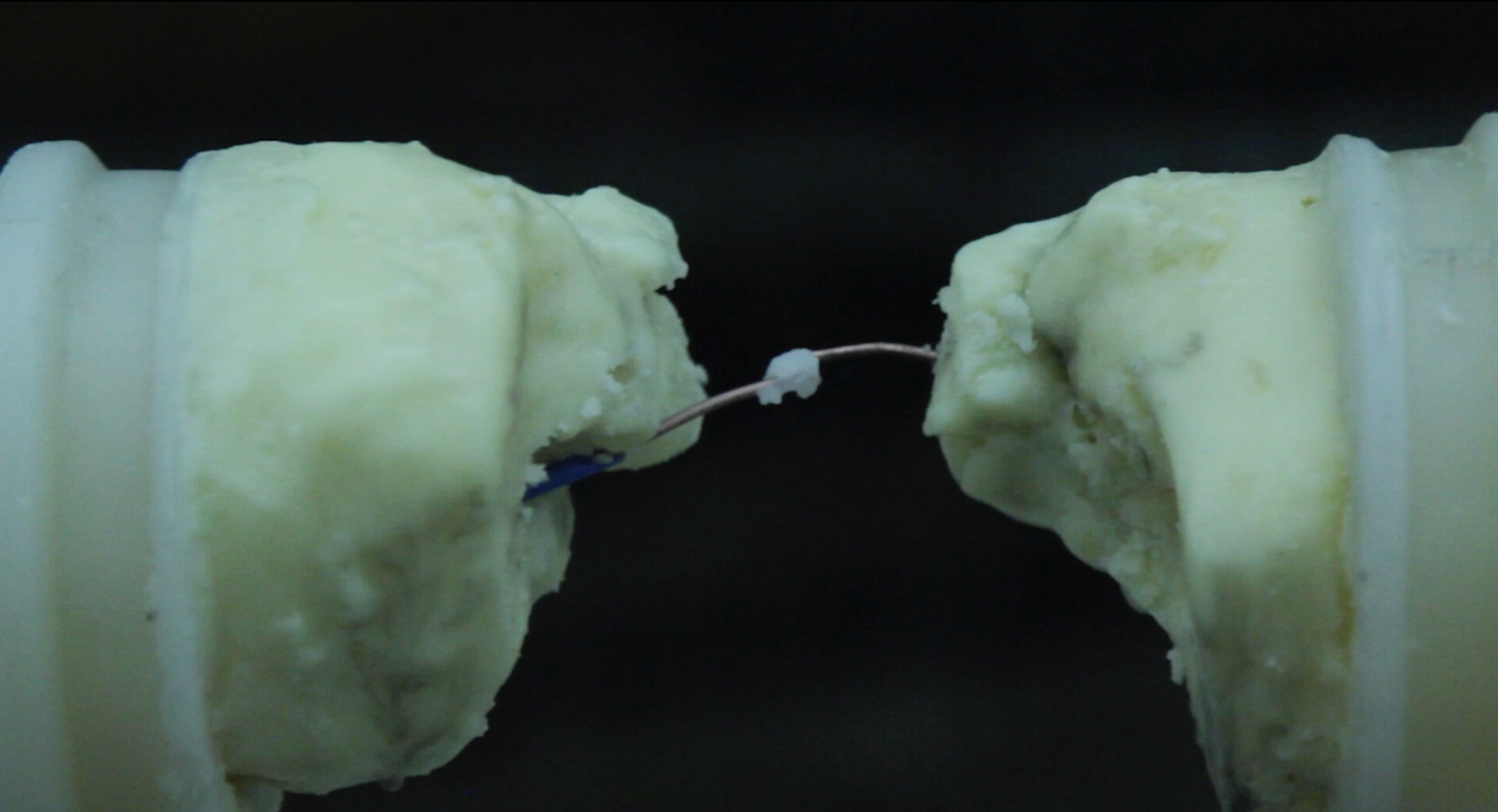
Thrombosis, installation views
These walls more than signs of a barrier, are perhaps protection, some sort of immunological mechanism, the body prefers to remain as an image, like a figurative x-ray, where we can draft in our minds the organs that mobilise and stimulate this system, as we have bodies, a subliminal relation to this arrangement awakes. We the audience can see through the windows or optical aids the inner metabolism and stagnation of this structure that operates as a body.
Concealed car parts, and fragmented remnant fuel, displaced and emerging in the drips of fat. Perhaps the worker is a mechanic, a driver with car seats to conduct power. Licking conductors of cellulite and copper, a nervous system, possibly numbed by their surrounding adiposity. The worker ambulates from cell to cell, with poise and guts, encountering an image analogical to the outside of this body, it reads 'ARAL', as an impression of that adjacent place where motors get provided with combustible, with underground tunnels, that blow up and supply liquids, sounds like a dream of a facilely body that runs smoothly for this obstructed body, battling to soften its parts; under the table of our left vitrine, limbs, members and tissues, are cooking encased in a metal foil, as a remote conduction of the energy running through the room.
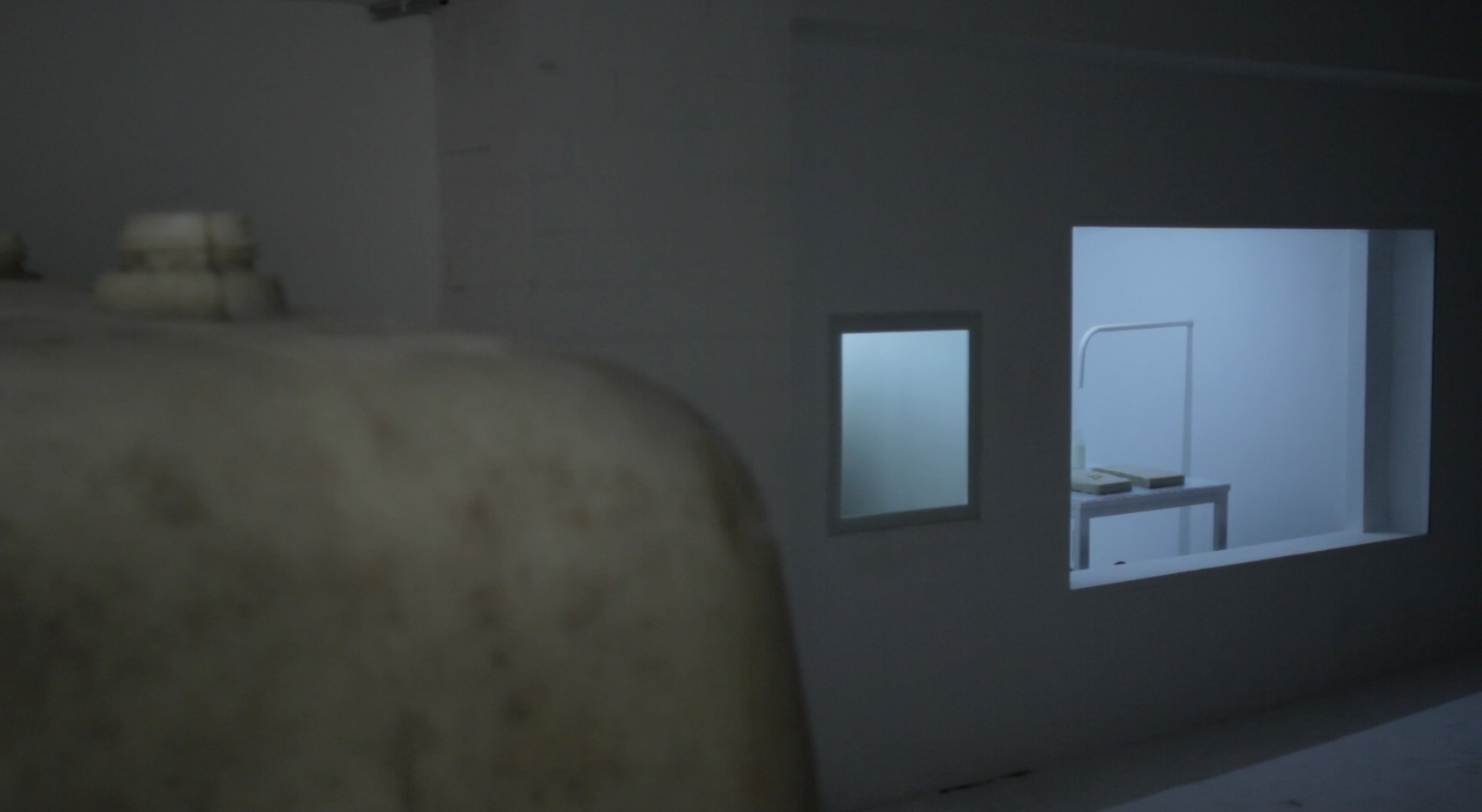
Thrombosis, detail

Thrombosis, detail
The pipes irrigate the uncongealed lard, to a point where they reach us, slowly that inner world bleeds inside ours, like a torrent of reality, the one of a clogged body, perhaps an unavailable one. Nearly to what feels like suspended time, a clock ticking for reparation to be executed, before an hypothetical overflow by guts.
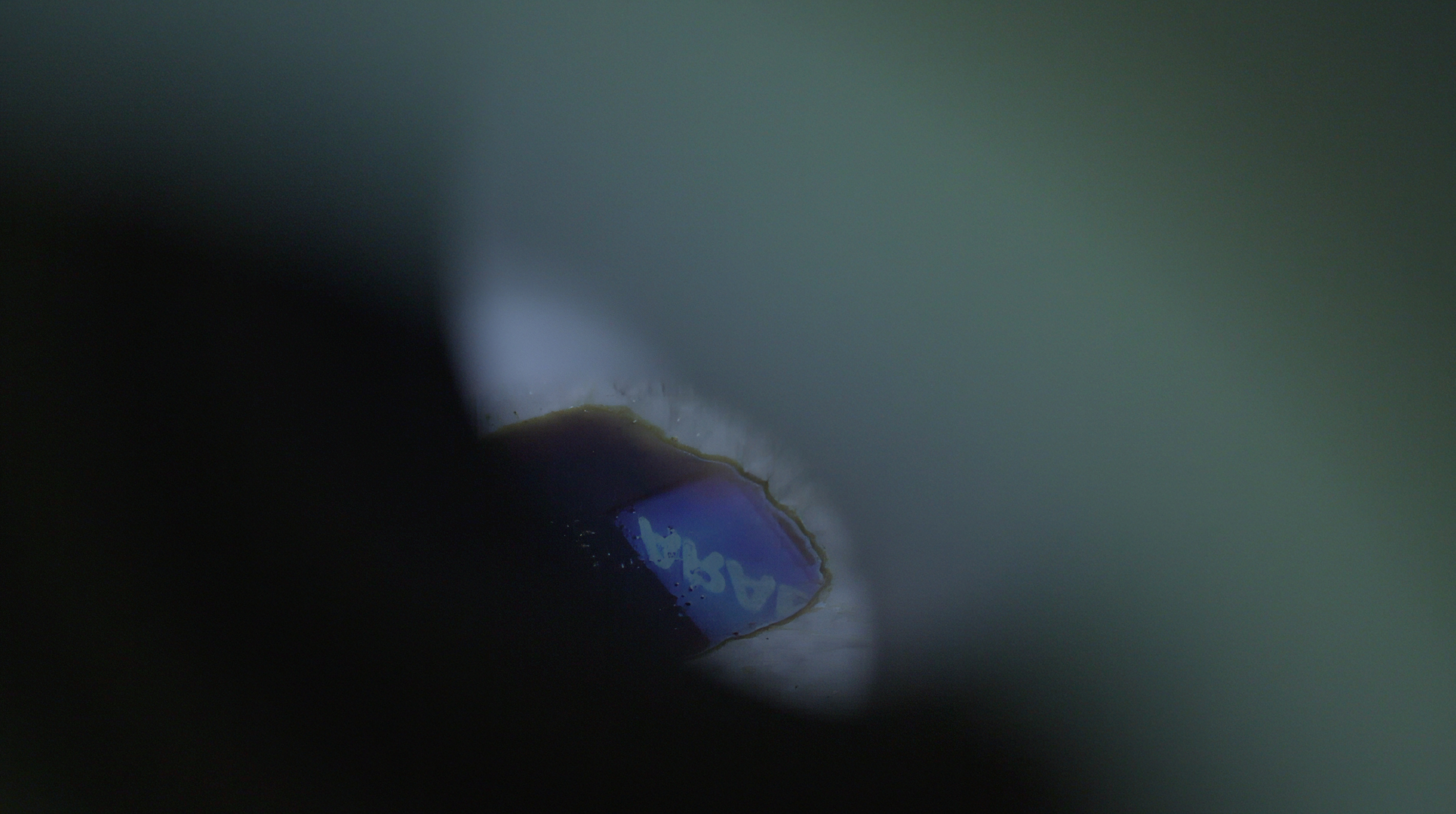
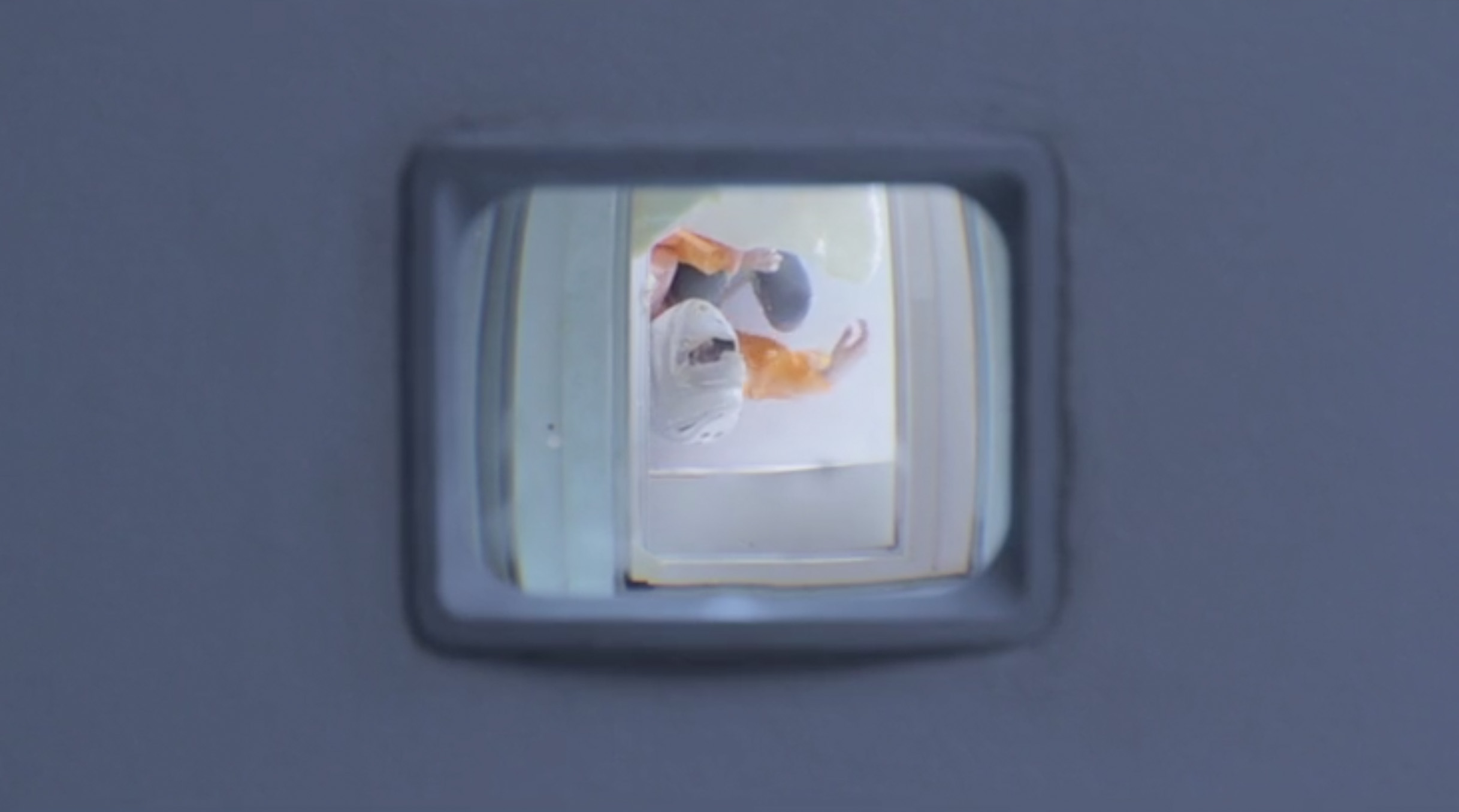
Thrombosis, details
Installation and Performance_Detail View_Spatial Installation_10m x 5.4m x 3.2m
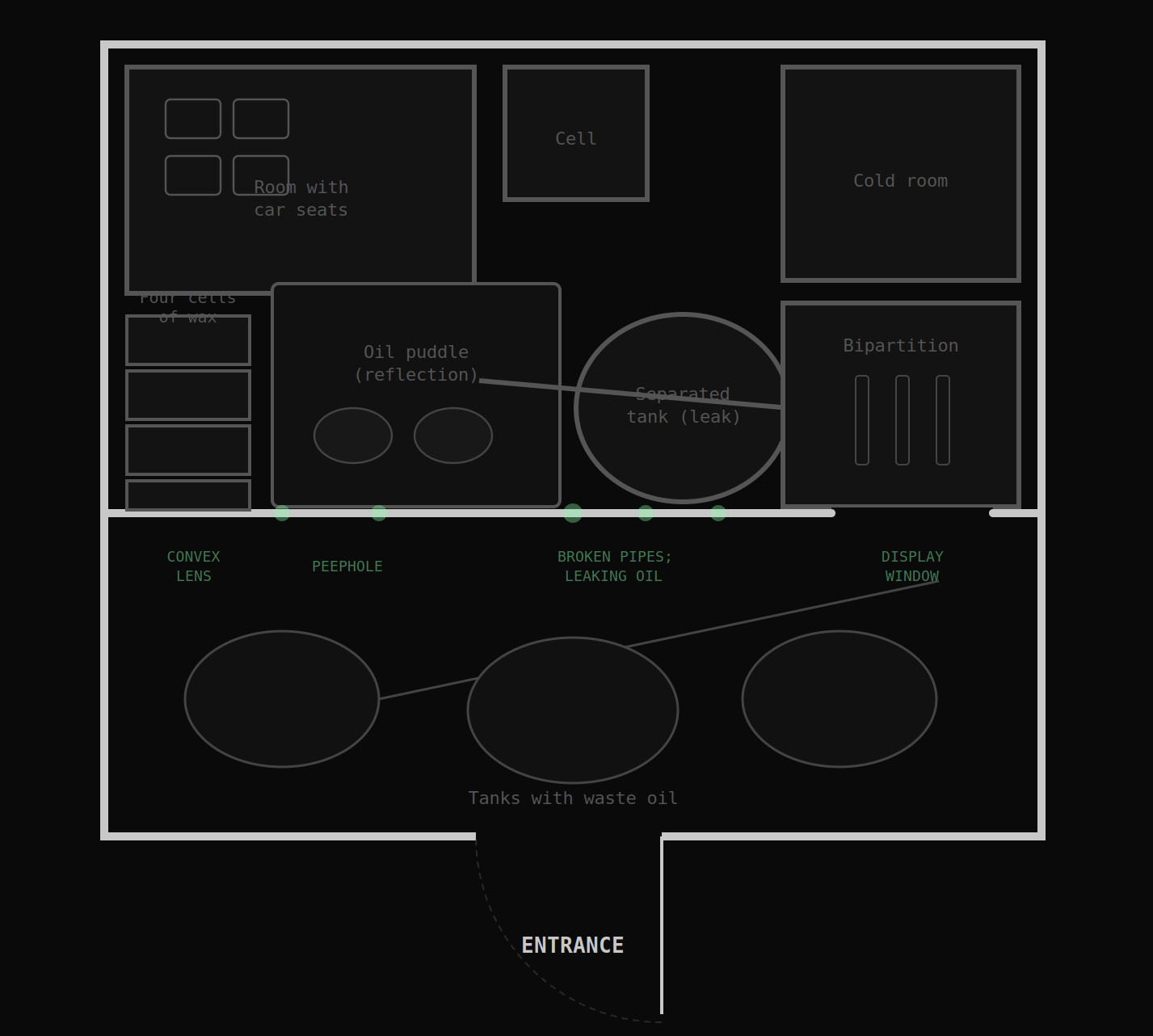

Thrombosis Floor Plan and Spatial Model
CIRCLE GAME_Film Still_HD_42 min
In the film Circle Game, the protagonists fall into a trap when they gaze at a forbidden image and become captivated by it. The image transforms into their new reality, with Ashley at its center.
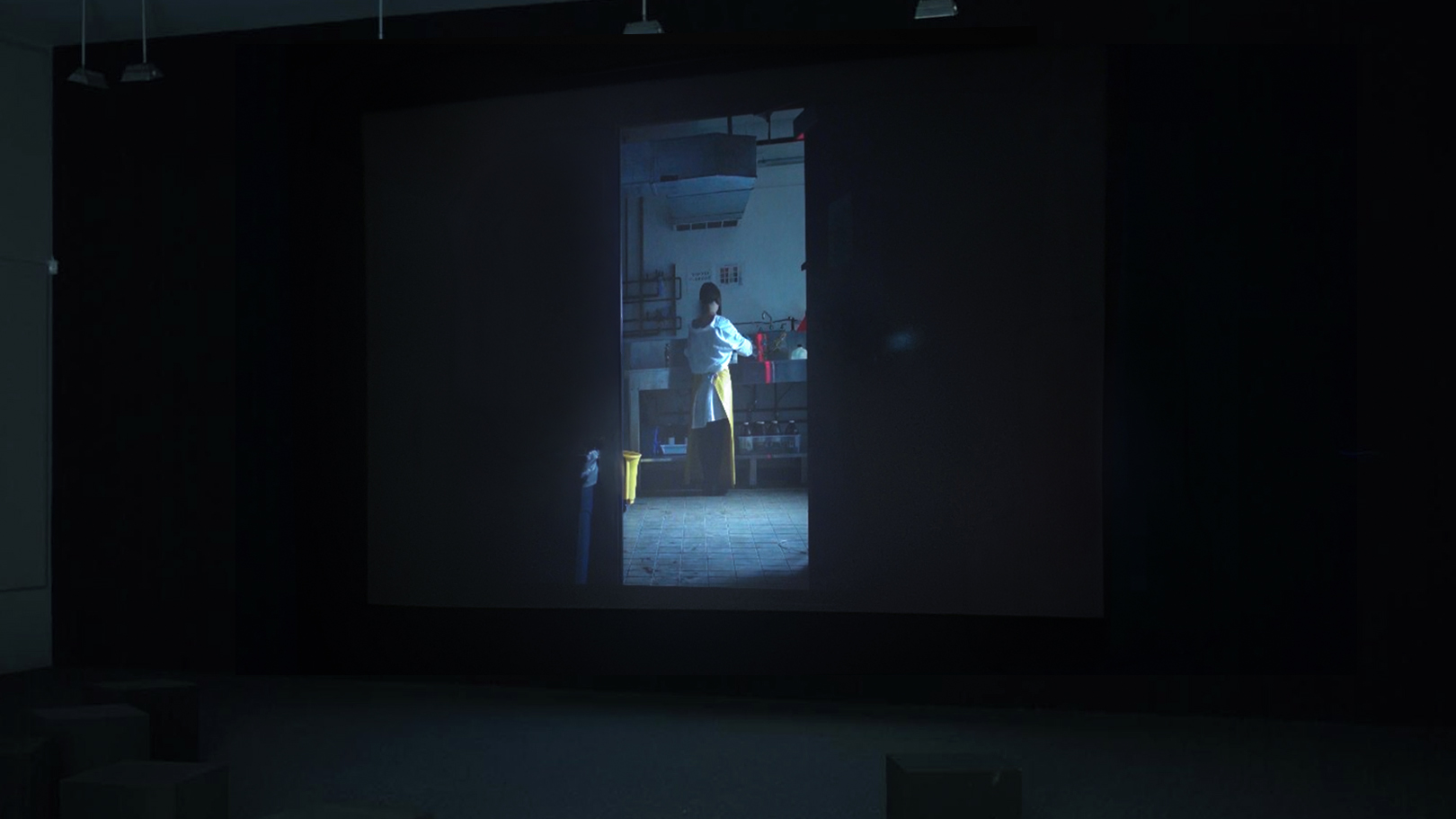
Circle Game_Exhibition View_HD_42 min
The second part of The Circle Game was filmed a year later in Bulgaria. During its development, the focus shifted to performative "Real Life Posting," transferring cinematic techniques into reality. Instead of staging scenes on film, they were enacted in real life, with exhibition visitors unknowingly becoming protagonists. This approach, called "performative film," highlights how everyday situations are perceived cinematically.
Although this film itself has no connection to LARP, it inspired me and later influenced my work. LARP (Live Action Role-Playing) bridged the image world with reality, showing how physical participation and immersion in an imagined world could inform my future projects.

Circle Game, Part II
Installation with Performance. Constructed Spaces, Door Viewers, Chairs, Lamps, Potted Plants. St. Petri Church in Lübeck, Oberbeck-Gesellschaft, Kunstverein Lübeck. Curated by Oliver Zybok and Lisa Klosterkötter. 10m x 4.5m x 2.4m
Upon entering the church, visitors were first led into a sterile white room labeled "Consultation Room." Behind it lay a narrow, almost identical waiting room with white chairs and a "Please wait" sign. Another door led to the next, similarly familiar-looking room. This sequence repeated several times, creating an unsettling sense of wanting to escape the endless cycle. After passing through five or more rooms, visitors eventually returned to the exit—the promised consultation room remained unreachable.
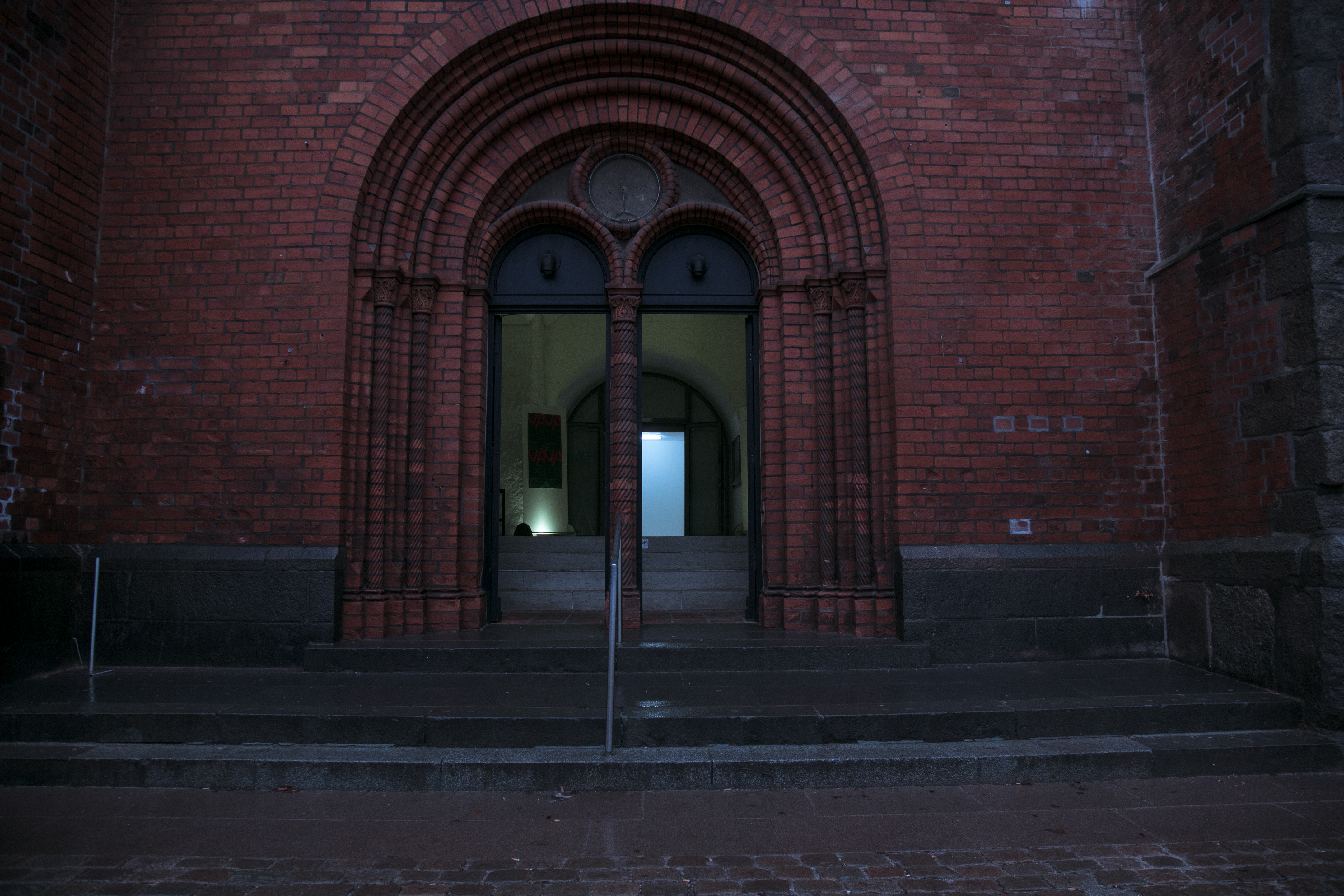
Bright Room_Detail View_Spatial Installation_10m x 4.5m x 2.4m
Bright Room is a closed system of spaces within a space. The installation was accessible through the entrance of St. Petri Church and consisted of ten almost identical, narrow, and confined rooms arranged in a circular loop. At the center was an inaccessible room adjoining all the others. The sterile, white furnishings, plastic folding chairs, potted plants, and doors with signs such as "Please wait" or "Consultation Room", gave the spaces a bureaucratic atmosphere.
Each room had a window looking into the central room, with a peephole above it that could be used from the inside. This construction, similar to a one-way mirror, strictly divided observing from being observed, creating asymmetrical visibility. Two groups appeared to occupy adjacent rooms, yet were deliberately separated by the installation's design. Subtle interventions in the space suggested the presence of an invisible entity that was never fully tangible.
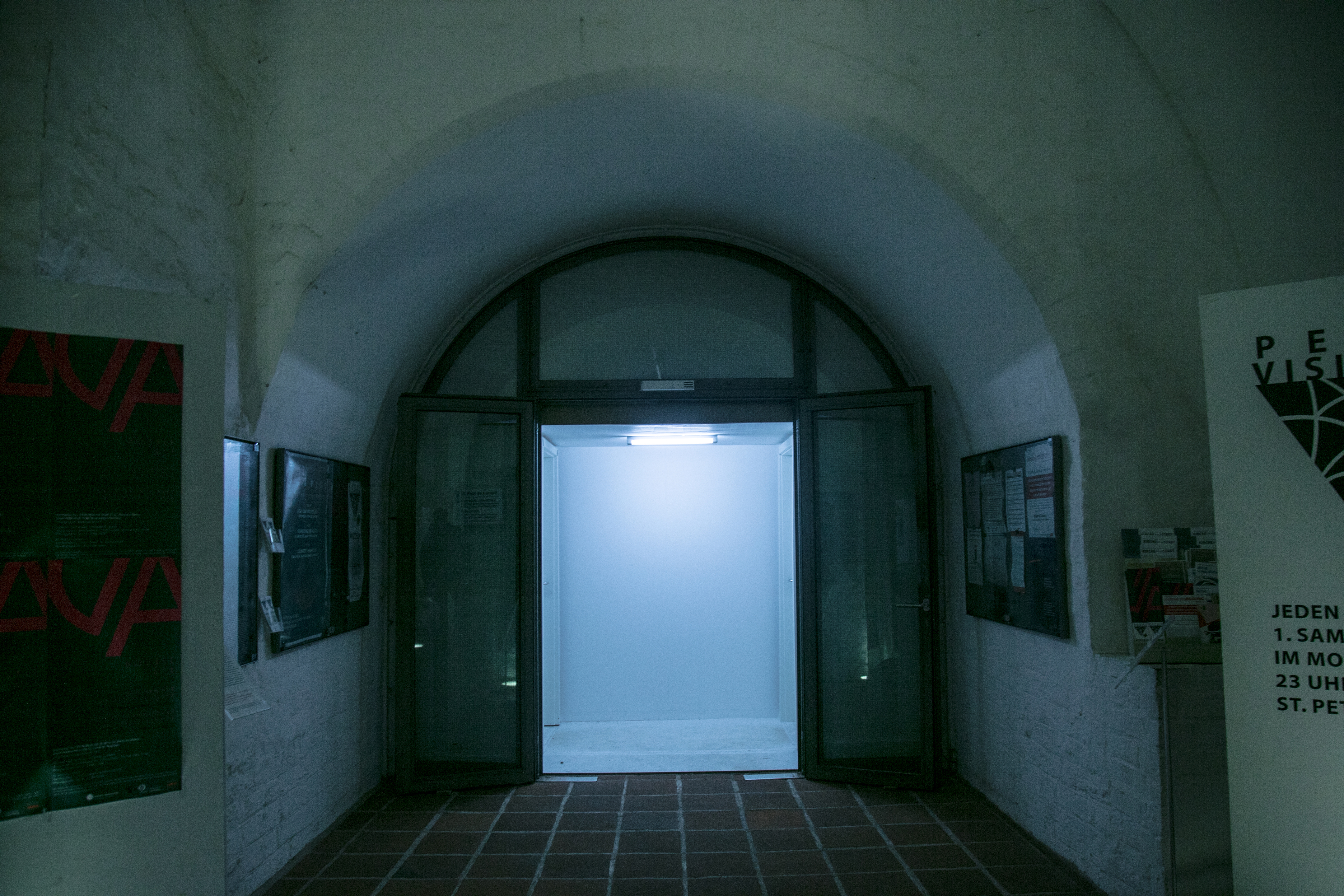
Bright Room_Detail View_Spatial Installation_10m x 4.5m x 2.4m
One room was illuminated, while the other was not. This interplay of observing and being observed generated a panoptic dynamic, shifting perceptions of power and visibility.
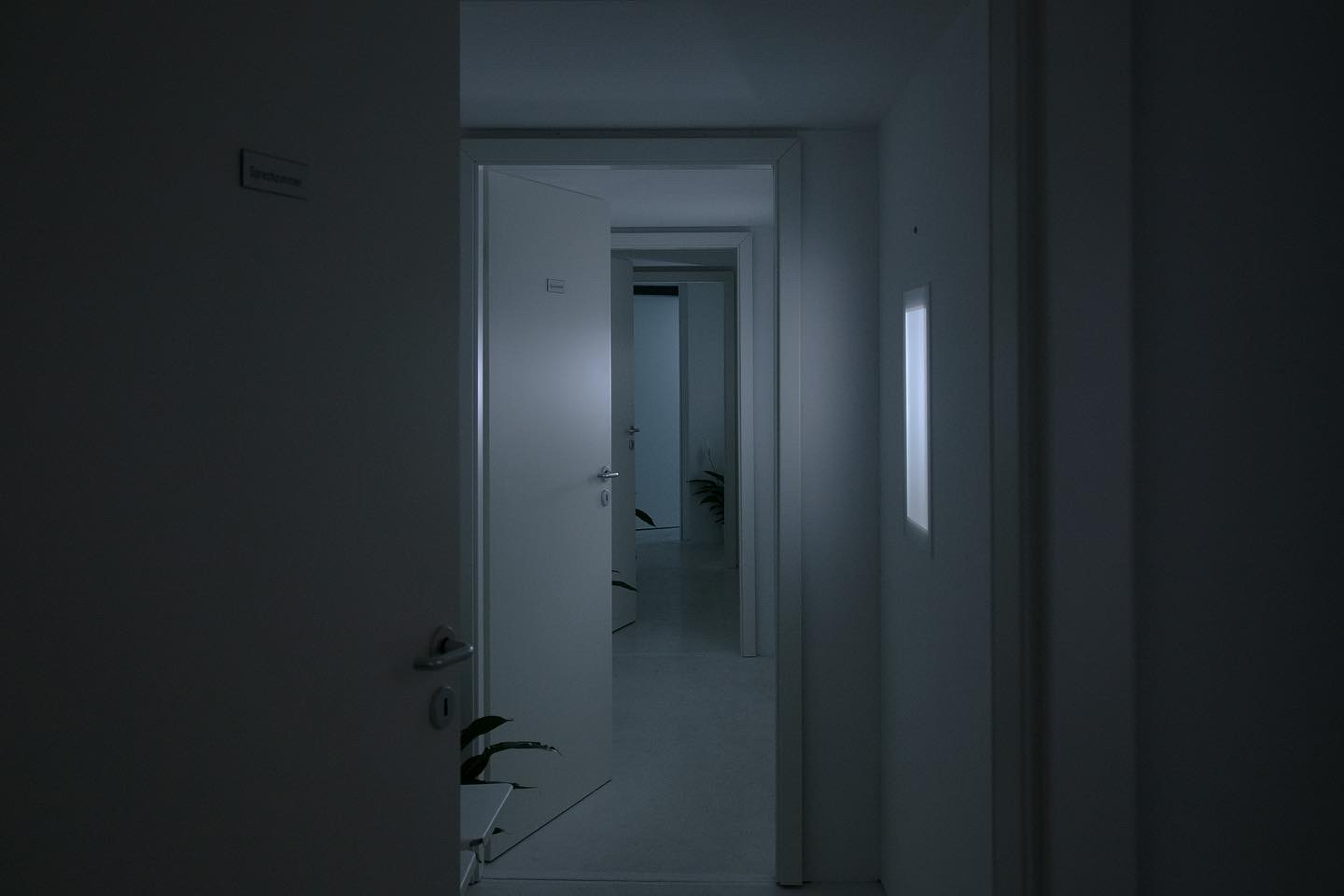
Bright Room_Detail View_Spatial Installation_10m x 4.5m x 2.4m
The peepholes pointed less to an observing person at the center and more to the structure of observation itself. The focus was not on the observer but on an external gaze that organized the scene and the arrangement of the rooms. Visitors experienced a dual dependency: their own gaze was overlaid by an external, inaccessible gaze, represented as an unreachable interior within the installation. This gaze was simultaneously experienced as internal and external, as intimate and foreign, revealing the subject's dependency on the possibility of being observed.
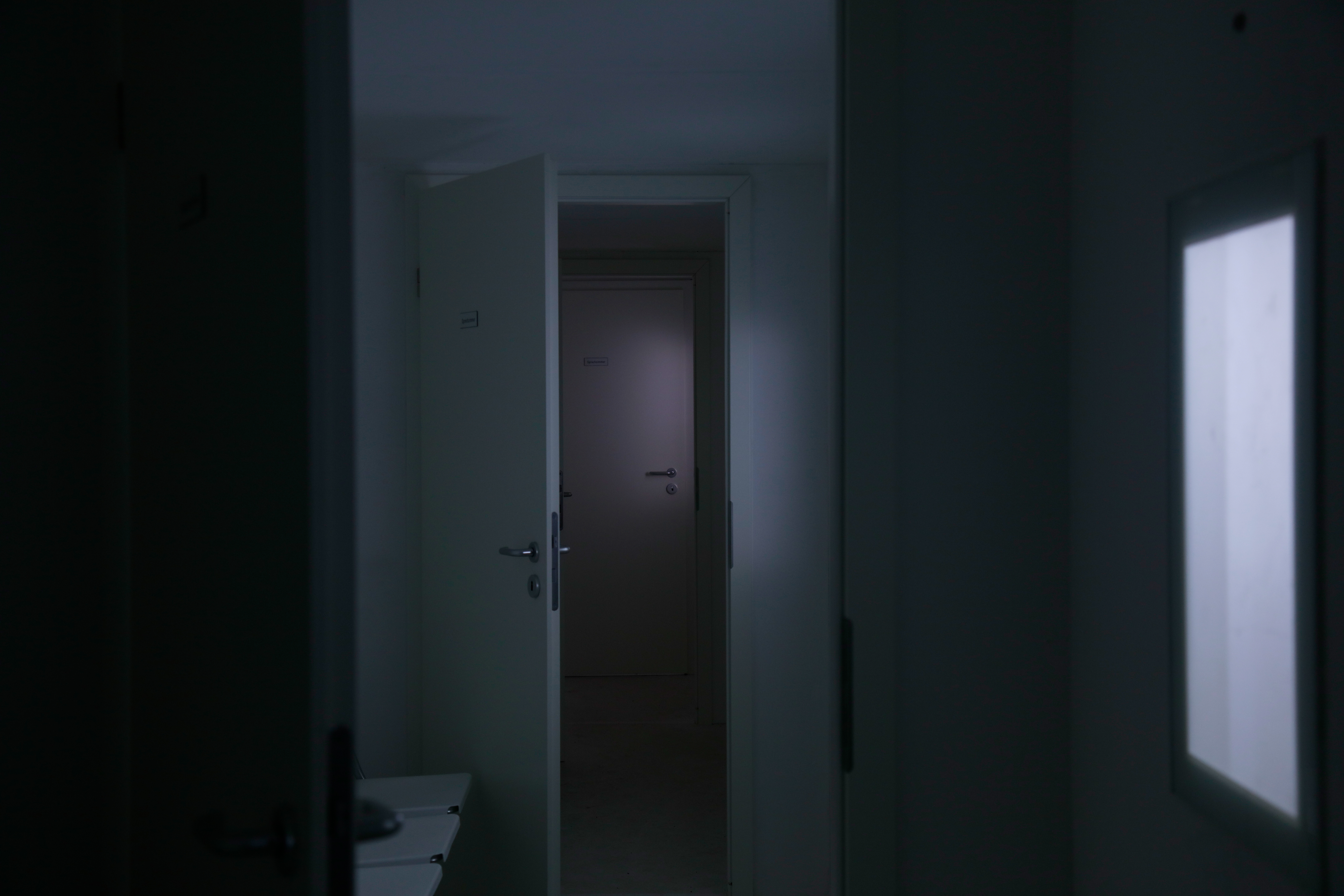
Bright Room_Detail View_Spatial Installation_10m x 4.5m x 2.4m
The installation also disrupted the expectations of church visitors, who anticipated access to the nave. Instead, the path ended abruptly, provoking confusion and occasionally criticism.
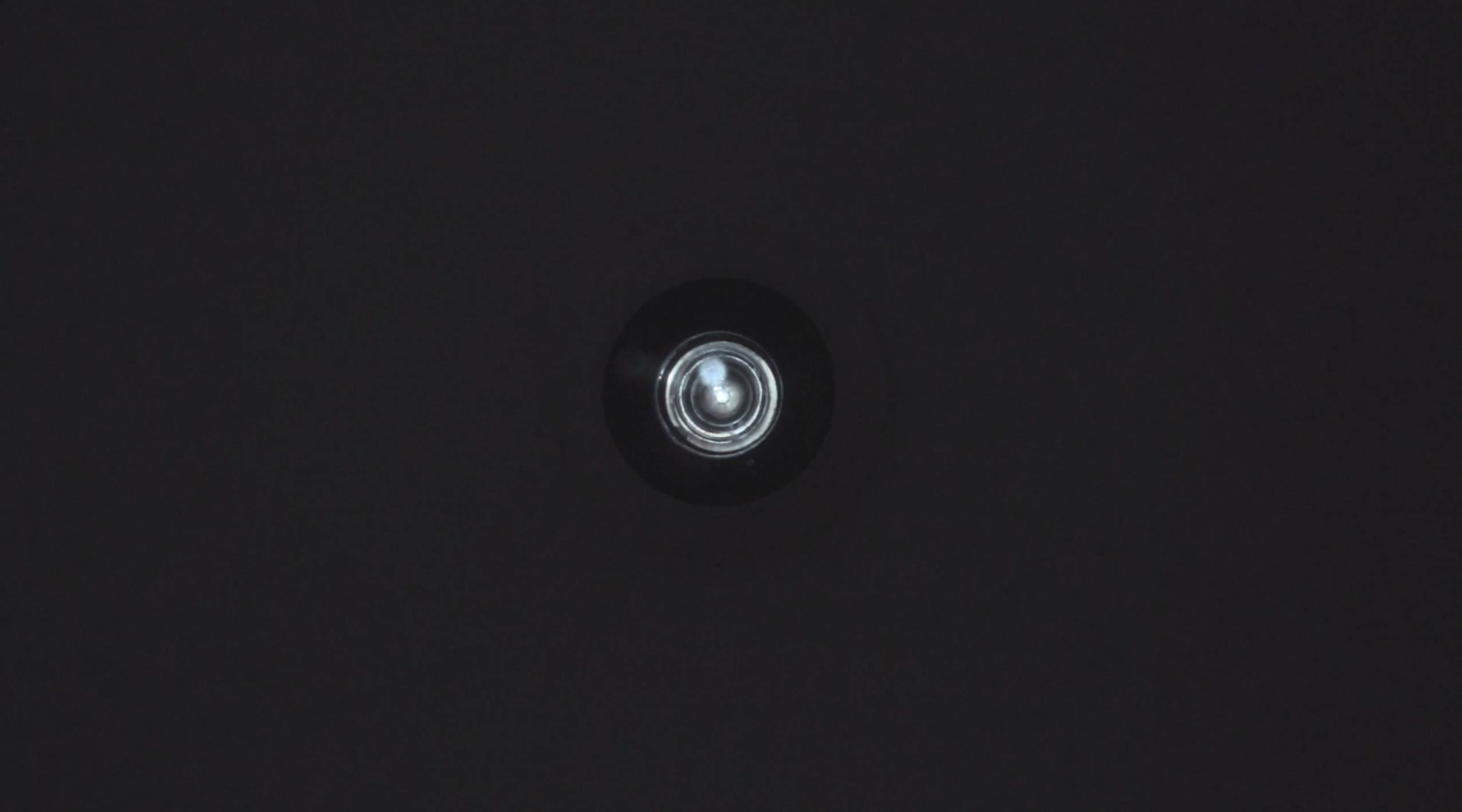
Bright Room_Detail View_Spatial Installation_10m x 4.5m x 2.4m
Bright Room left some visitors with a disturbing connection between space and perception. The usual expectations of a sacred space were intentionally subverted, requiring a reflection on one's own perspective. The installation demonstrated how altered situations can force a new point of view, reshaping the understanding of one's relationship to space and observation.
Project, Play, Experiment. Modified iPhone Without Passcode Lock. 187 Videos (8:67 min - 21:14 min). An iPhone with a worn phone case lies on the floor of a gallery, powered on and without a passcode. aplus, contemporary art Berlin
The project involved placing a mobile phone in a location as if it belonged to someone, with the aim of creating a situation that was not immediately identifiable as an artwork. The phone, powered on without a passcode or privacy settings, was connected to a charger and positioned discreetly, making it easy to overlook. Interaction with the phone was voluntary and left to the discretion of the viewers.
Upon closer inspection, the phone appeared nearly empty except for a single photo album. This album contained numerous videos recorded over an extended period. Each video followed the same pattern: a person arranges meetings through an app, visits various addresses, gains access to strangers' apartments, and films the interiors using a body camera.
The videos revealed a disturbing intrusion into the privacy of those being filmed, mirroring the viewers' behavior as they explored the phone. By invading the phone owner's privacy, viewers became aware of their own curiosity and boundary-crossing tendencies.
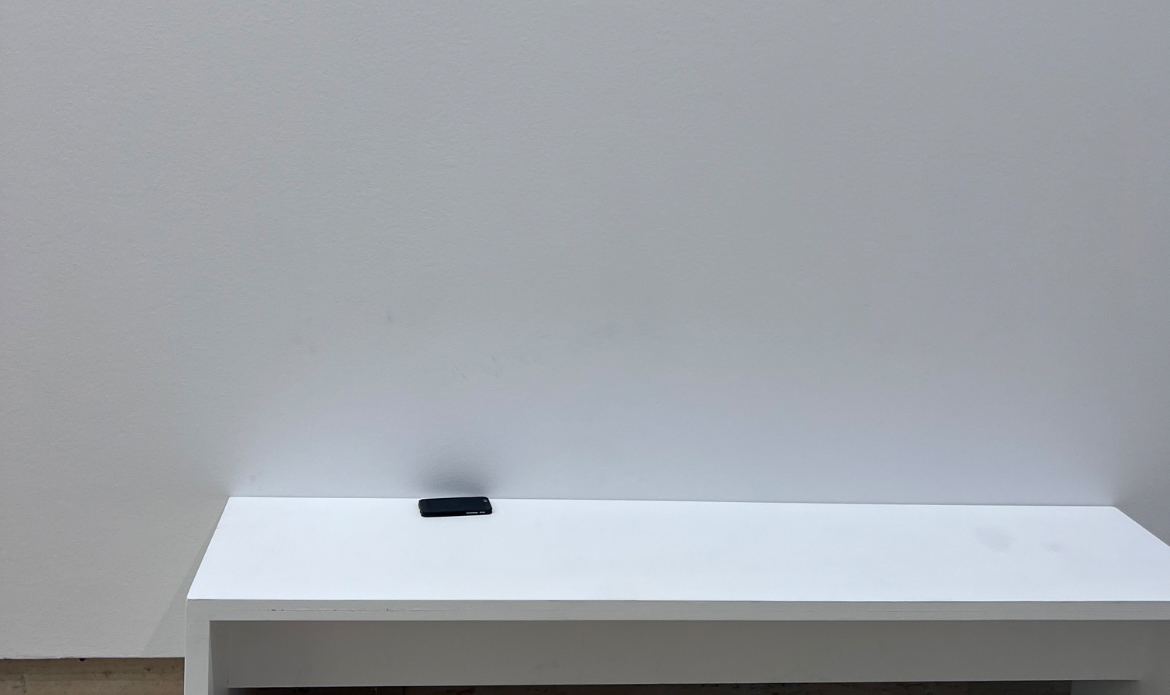
I Would Never Smile_2021-2023_Raumansicht_Project_LARP_iPhone X_7,7cm x 7,9cm x 1,4cm
When the iPhone was sold through the gallery, the buyer was informed of the possibility of unauthorized remote access. The connection to the artwork was both voyeuristic and participatory. To strengthen the parasocial relationship between the observer and the character behind the camera, an actress was hired to portray Lara Noa in a staged interaction with the buyer.
This interaction, also recorded, added another layer to the construction of reality, identity, and fiction. The project is less a physical artwork and more a socio-psychological experiment disguised as a game. The iPhone served as an access point to the video collection and, consequently, to Lara Noa's world, while secretly allowing remote access by the person at the other end.
In the videos, Lara Noa left coded images during her apartment visits. Deciphering these images led to a website granting indirect access to one of her iPhones. Buyers of such devices risk being observed or tracked themselves: the website allows control of the phone's front and main cameras, access to geolocation data, and initiation of contact by strangers.
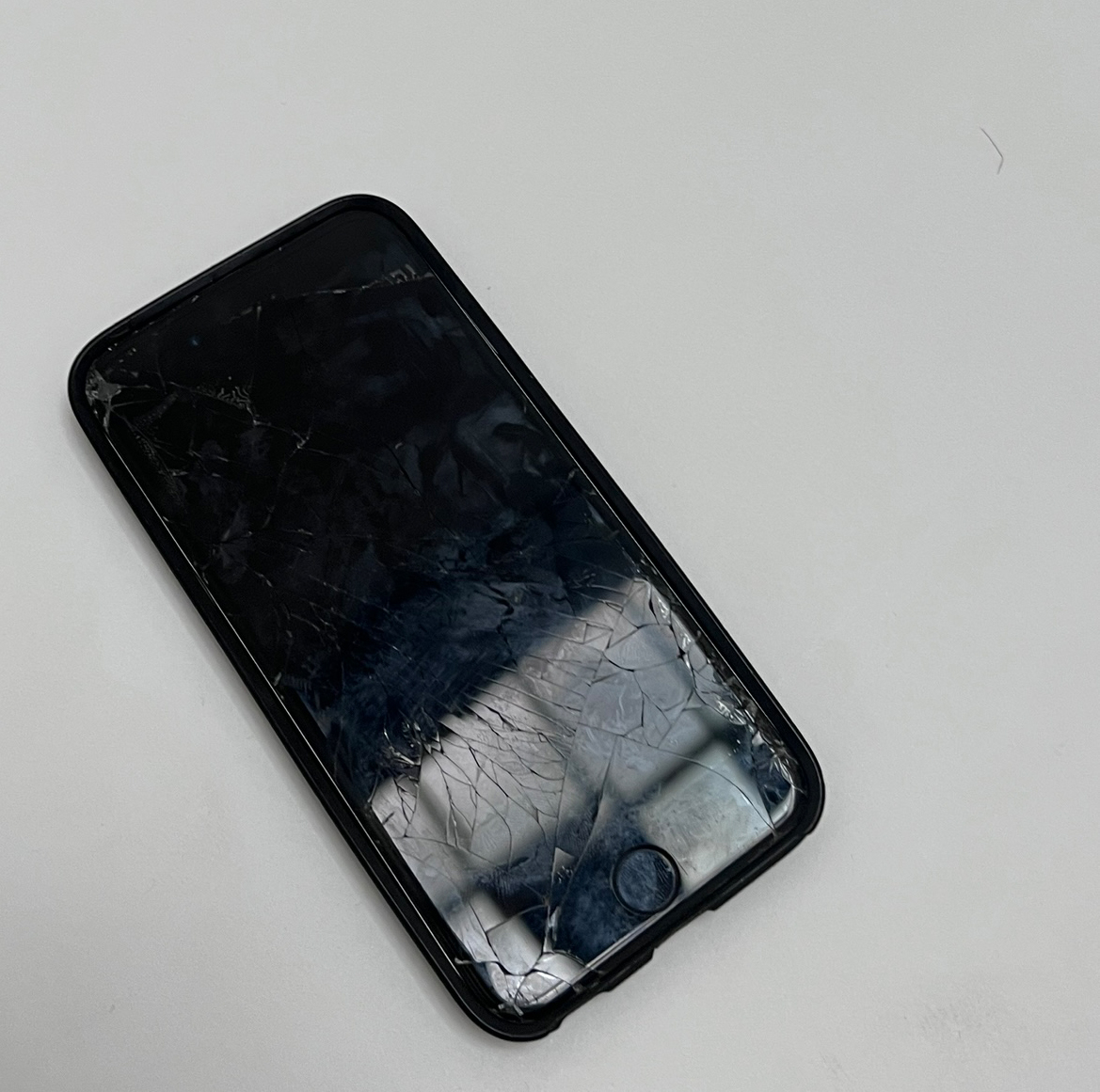
I Would Never Smile_2021-2023_Detailansicht_Project_LARP_iPhone X_7,7cm x 7,9cm x 1,4cm
The initial image of Lara Noa gradually unraveled—she was not just one person but a construct of multiple identities. It remained unclear who was truly at the other end, blurring the line between fiction and reality.
The artist plans to expand the project by introducing more doppelgängers and strategically placing phones in public spaces to encourage new interactions and observations.
The aim of this project is to create an artificial situation to examine human reactions. It is based on the fear of losing privacy and deliberately amplifies this fear to observe future behavior. The project simulates the growing unease of a digitally interconnected world and translates it into an everyday situation.
It investigates how people react in an atmosphere of heightened uncertainty and surveillance. The insights gained are intended to serve as a foundation for future technological developments and socio-psychological studies.
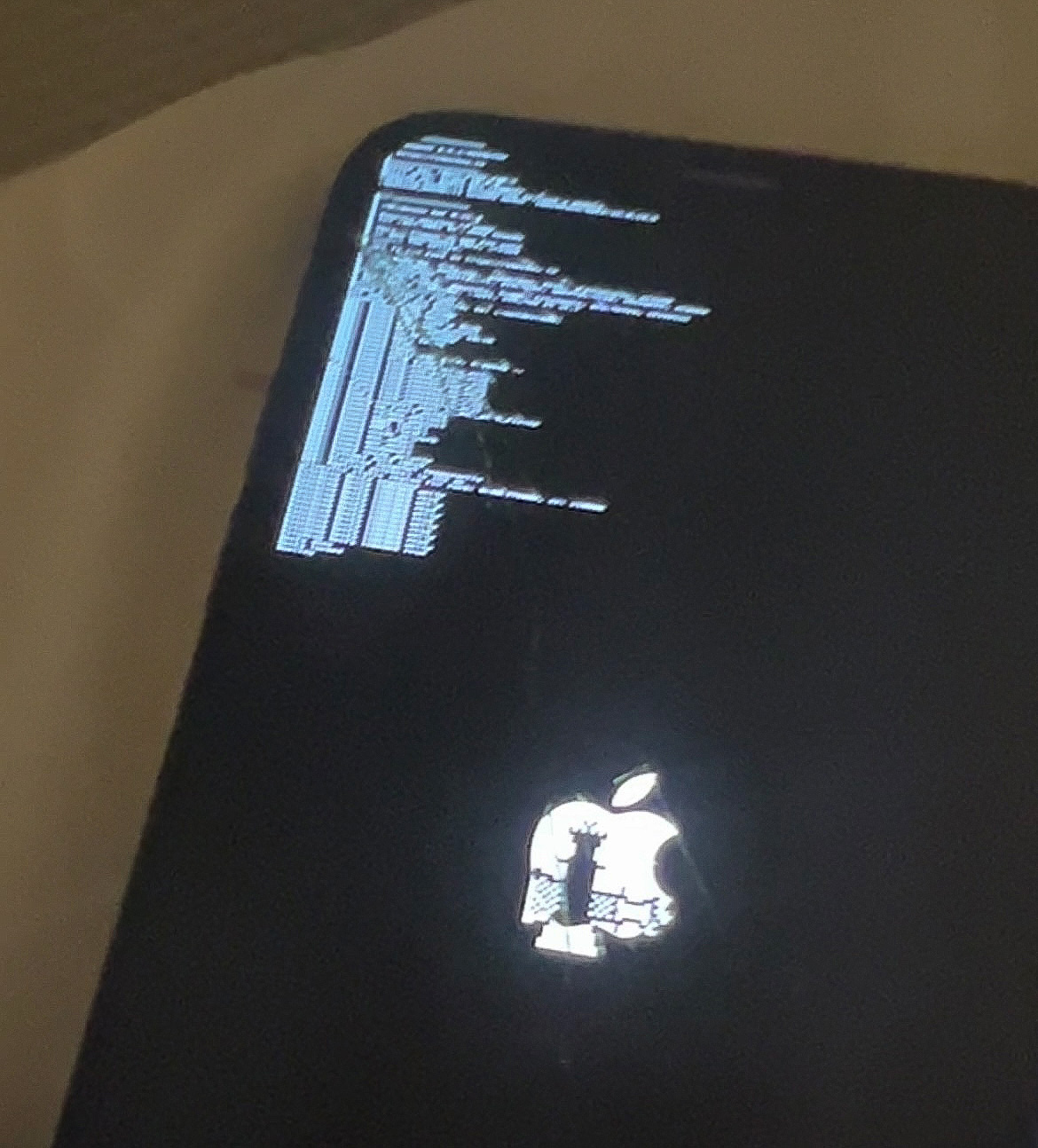
I Would Never Smile_2021-2023_Detail View_Project_LARP
The aim of this project is to create an artificial situation to examine human reactions. It is based on the fear of losing privacy and deliberately amplifies this fear to observe future behavior. The project simulates the growing uncertainty in a digitally connected world and translates it into an everyday scenario.
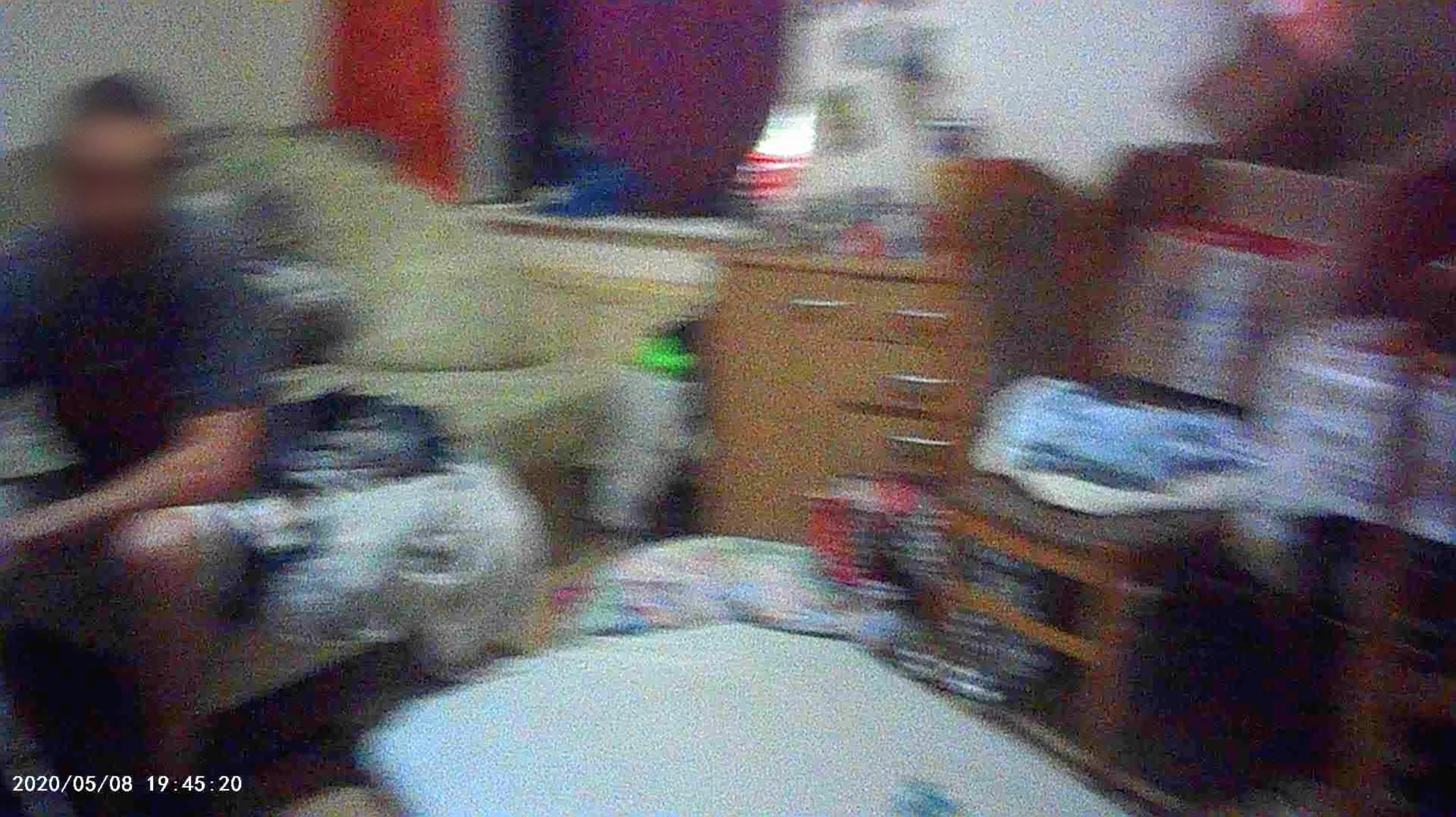
I Would Never Smile_2021-2023_Detail View
Spatial Installation, Kunstakademie Düsseldorf
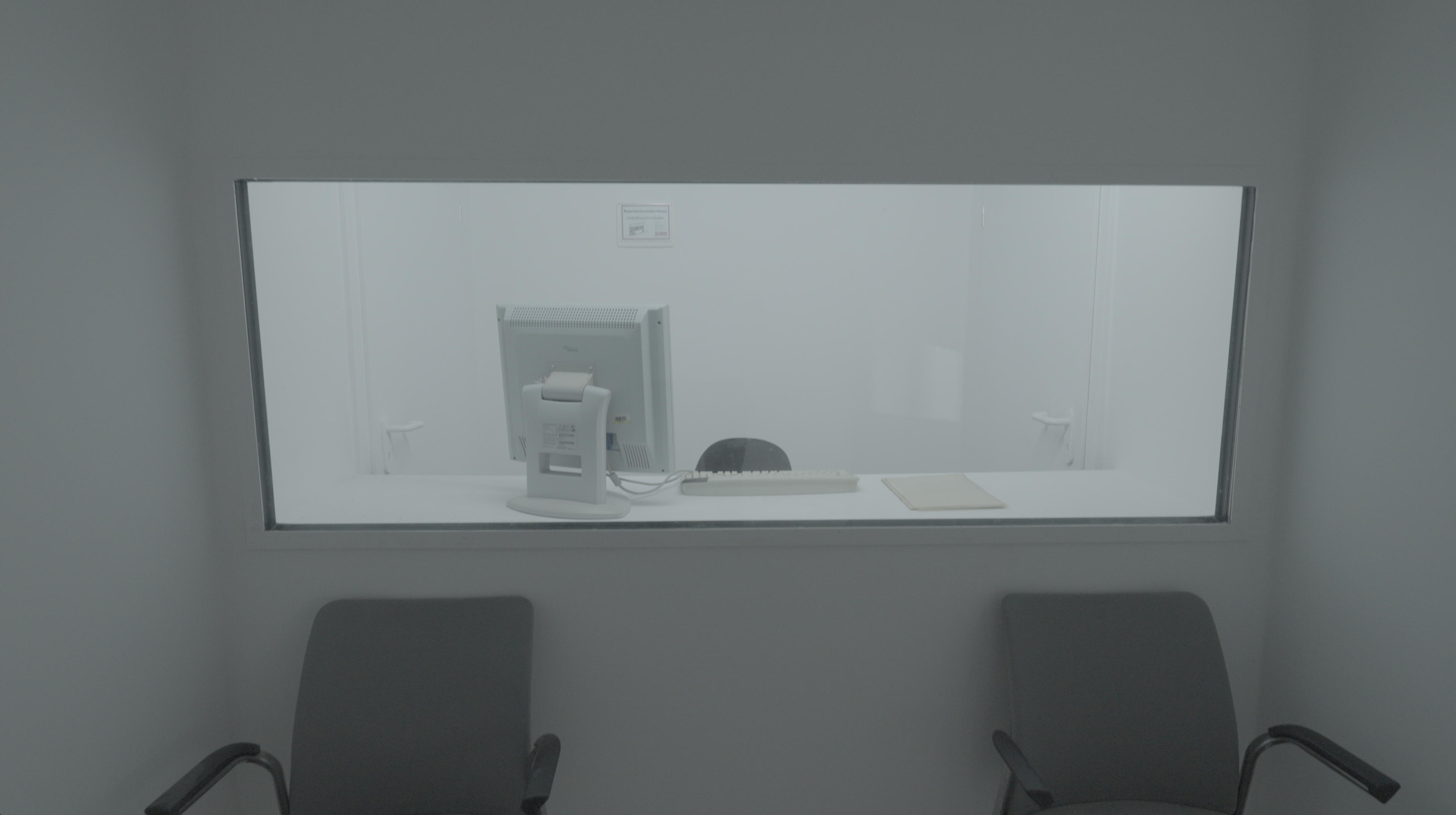
Office for Unusable Ideas is a long-term artistic and scientific project that takes the form of an immersive, walk-in spatial installation. The work consists of several interconnected rooms that form a fictional office-laboratory. At its center is the investigation of biohybrid systems in which living human iPSC neurons on a multi-electrode array are used as a biological computing element.
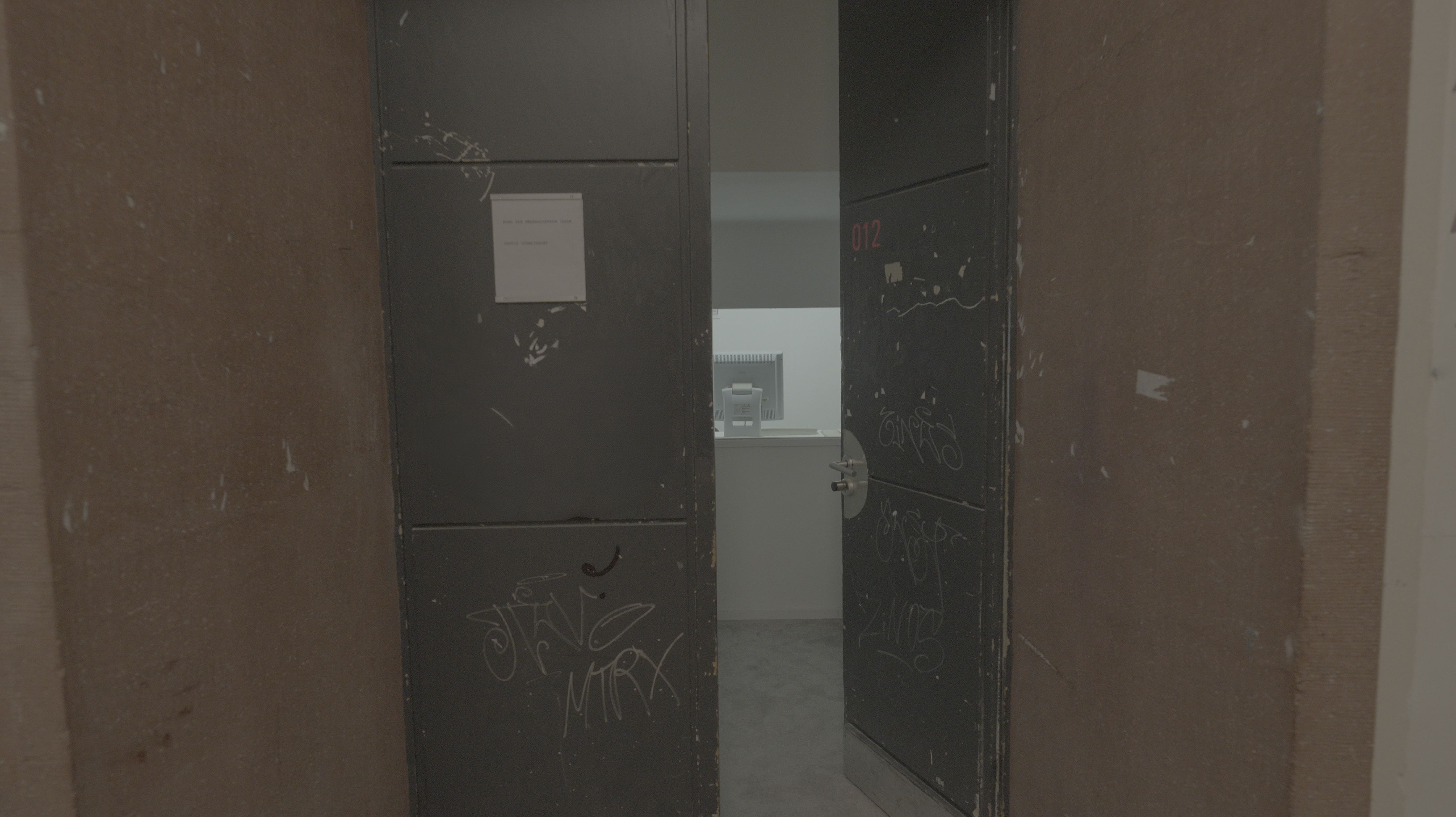
Exhibition view, Office for Unusable Ideas, 2025, original version of the installation, Kunstakademie Düsseldorf, Room 012
The first version of the project (Delphi 1) was realized and shown in July 2025 as part of the graduation exhibition of the Kunstakademie Düsseldorf. In this speculative version, the CO₂ incubator and the MEA system were already present as central sculptural elements. The work was awarded the Bergischer Kunstpreis 2025 and will be exhibited institutionally in September 2025.
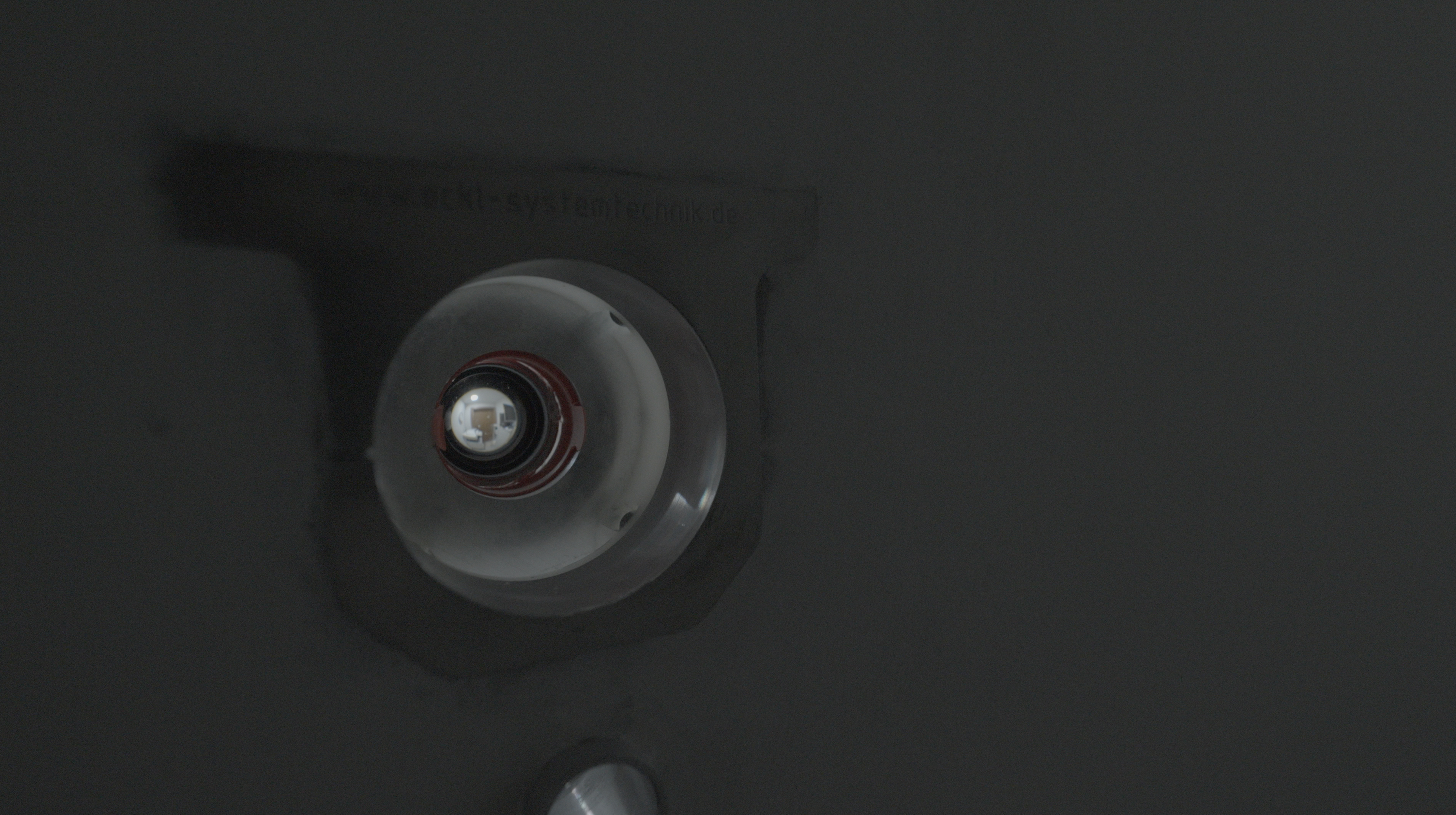
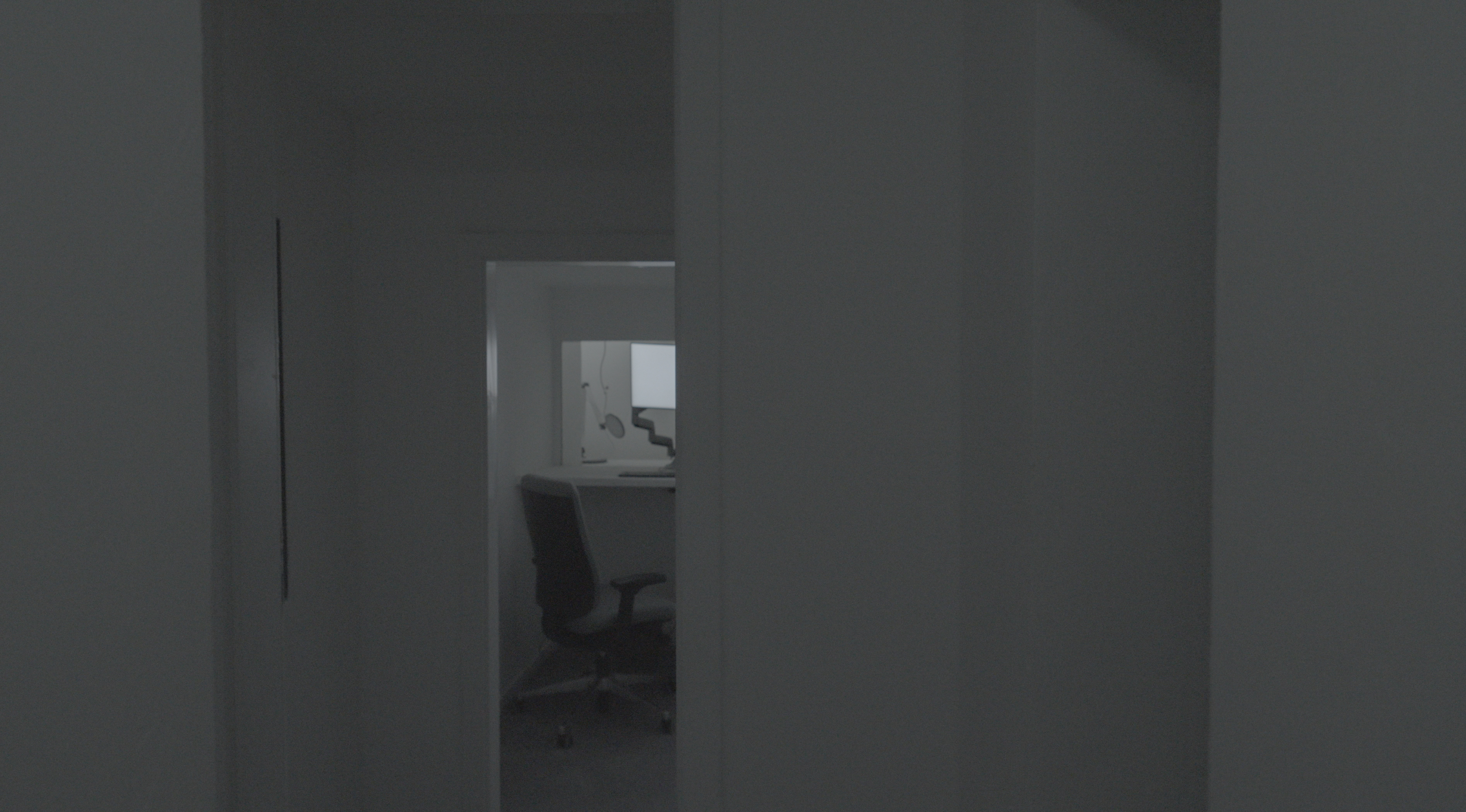
On entering the installation, a labyrinthine, distorted office opens up. At first glance the architecture seems familiar, yet it quickly proves disorienting and unpredictable. Rooms are nested within one another, and dimensions and proportions are hard to gauge. Long corridors lead into narrow passages, and bright zones give way abruptly to dark chambers. Capsules embedded in the walls hold diaries, notes, and personal documents that can be seen only through small peepholes and so remain out of reach.
Exhibition view, Office for Unusable Ideas, 2025, detail, peephole
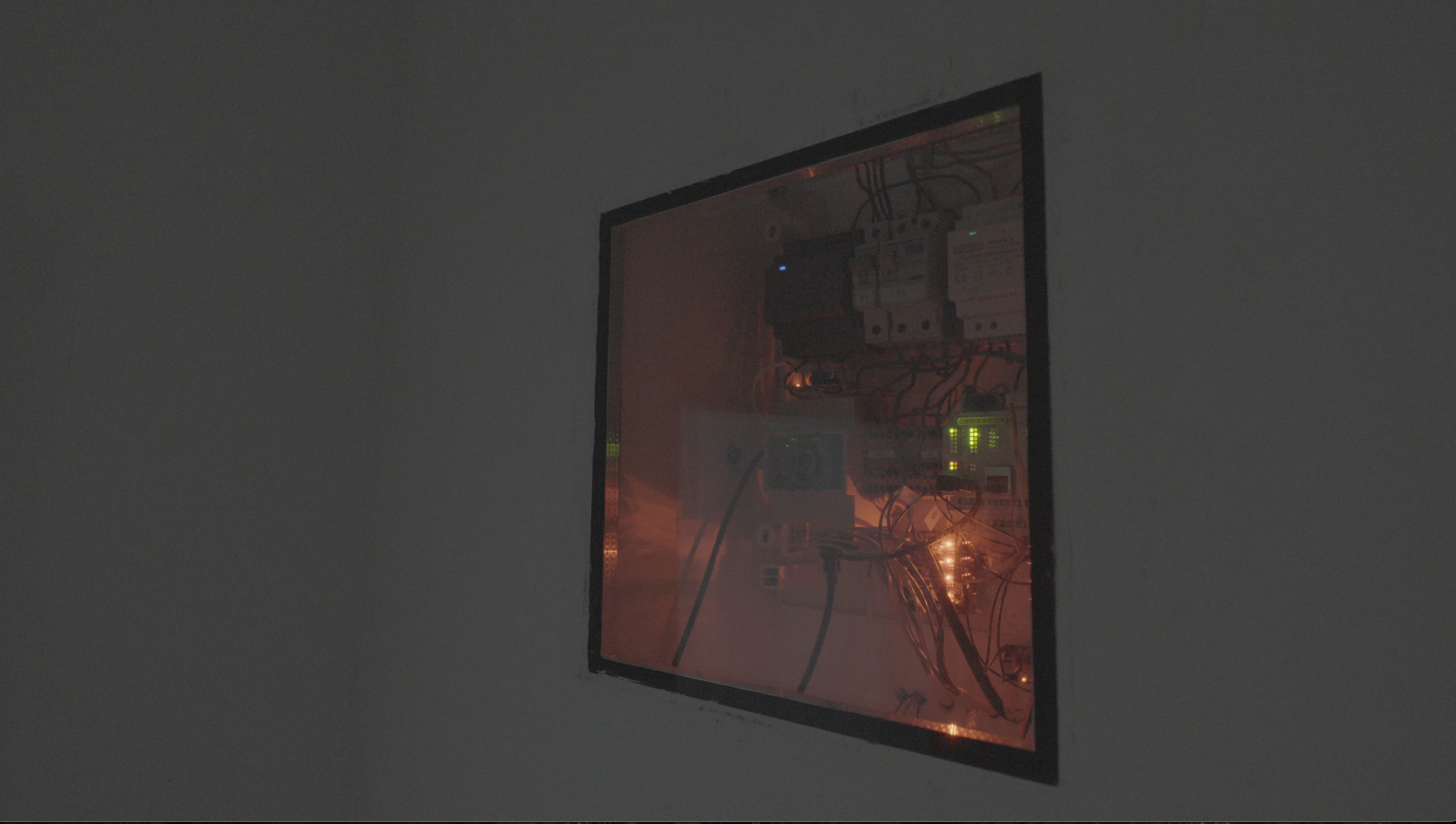
At the end of a corridor, behind glass, stands "The Core," a purpose-built electronics cabinet in which all the cables converge. Here lies the heart of the installation: the self-developed control system Delphi. Trained on the personal correspondence, diaries, and archives of a deceased, absent person, Delphi functions as an affective mind-clone, a grief bot that seeks to hold onto a consciousness in a state of utmost mental clarity; the work is rooted in the biographical experience of dementia and loss of identity within the artist's own circle. From the Core, the entire office is wired. Delphi's responses appear not only on the monitor but materialize in the space itself: in flickering lamps, in the irregular dripping patterns of two faucets, and in brief pulses of light. The temporal intervals consistently follow Morse-code structures.
Moving through the installation corresponds to a journey through the layers of a program. Through a hatch in the office wall one enters a dark, earth-filled room, and from there, through a door, a narrow corridor that leads into an inner, almost sacral dark room. In the adjacent area stands the CO₂ incubator with "The Brain," a multi-electrode array that is visible only indirectly, through an endoscope camera. Through this architecture Delphi is given a body, and the office becomes the physical embodiment of the digital system. The human appears as an enclosed, bygone residue, while machine and organic extension are the active voices.
Exhibition view, Office for Unusable Ideas, 2025, detail
Exhibition view, Office for Unusable Ideas, 2025, detail
Exhibition view, Office for Unusable Ideas, 2025, detail
Sensors in the space continuously capture data such as movement, light, sound, and visitor interaction. This data is processed by Delphi and converted into electrical stimulation patterns that are sent through an STG stimulus generator to the MEA plate. The neuronal network processes the signals in a natural, chaotic way. The resulting activity is read out in real time and flows back into Delphi, and on the basis of this biological response the system drives physical elements in the space. In this way a genuine closed feedback loop emerges between visitor, digital control, and living biological material.
The project addresses the dissolution and reconstruction of identity, the instrumentalization of living material as a computing resource, and the ethical questions that arise when biological systems become computers. Work is currently underway on the next development stage (Delphi 2), which envisions the real integration of living neuronal networks into a stable biohybrid closed-loop system.
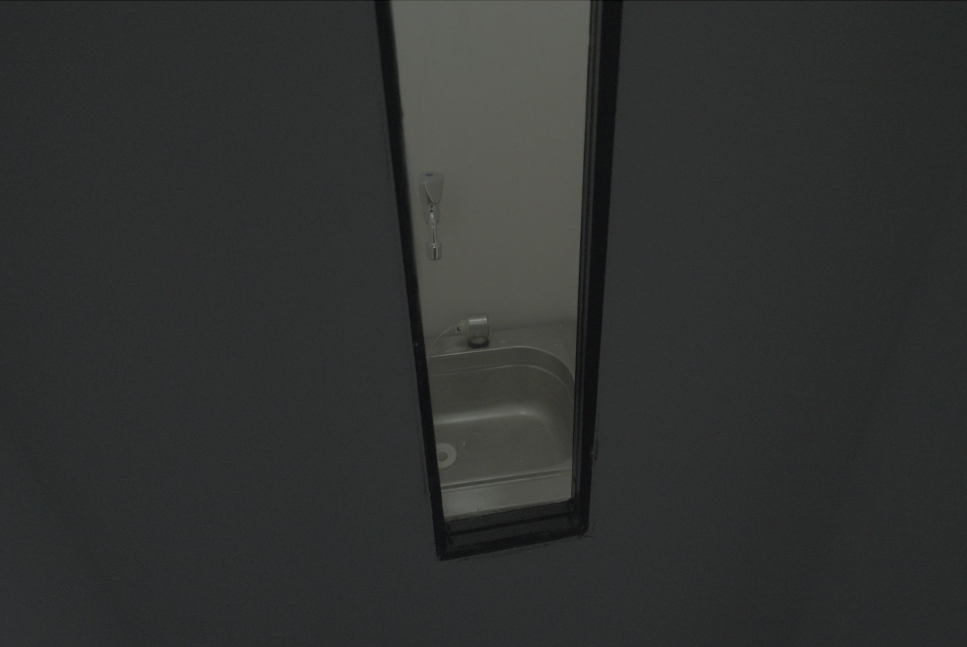
Exhibition view, Office for Unusable Ideas, 2025, detail
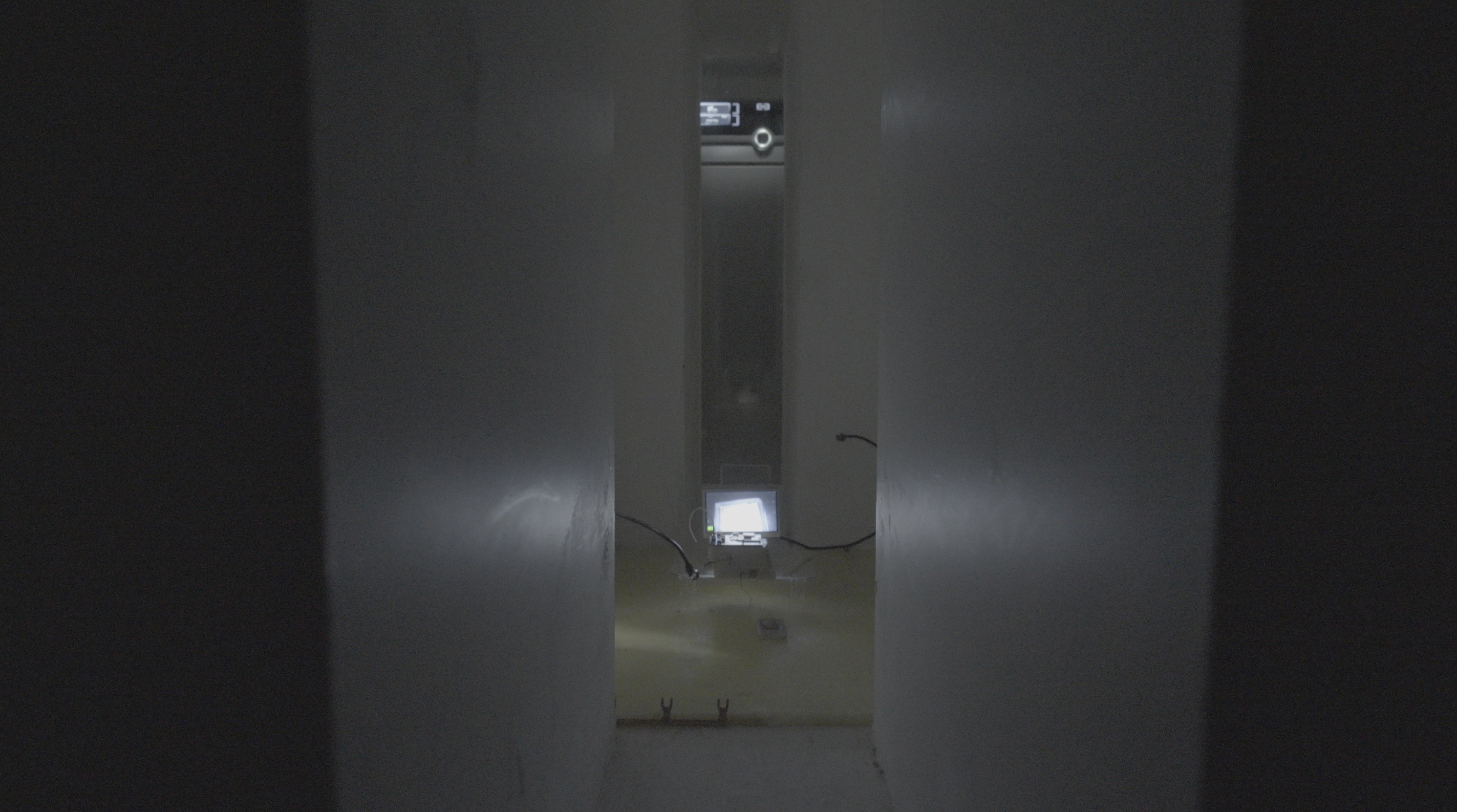
Exhibition view, Office for Unusable Ideas, 2025, detail
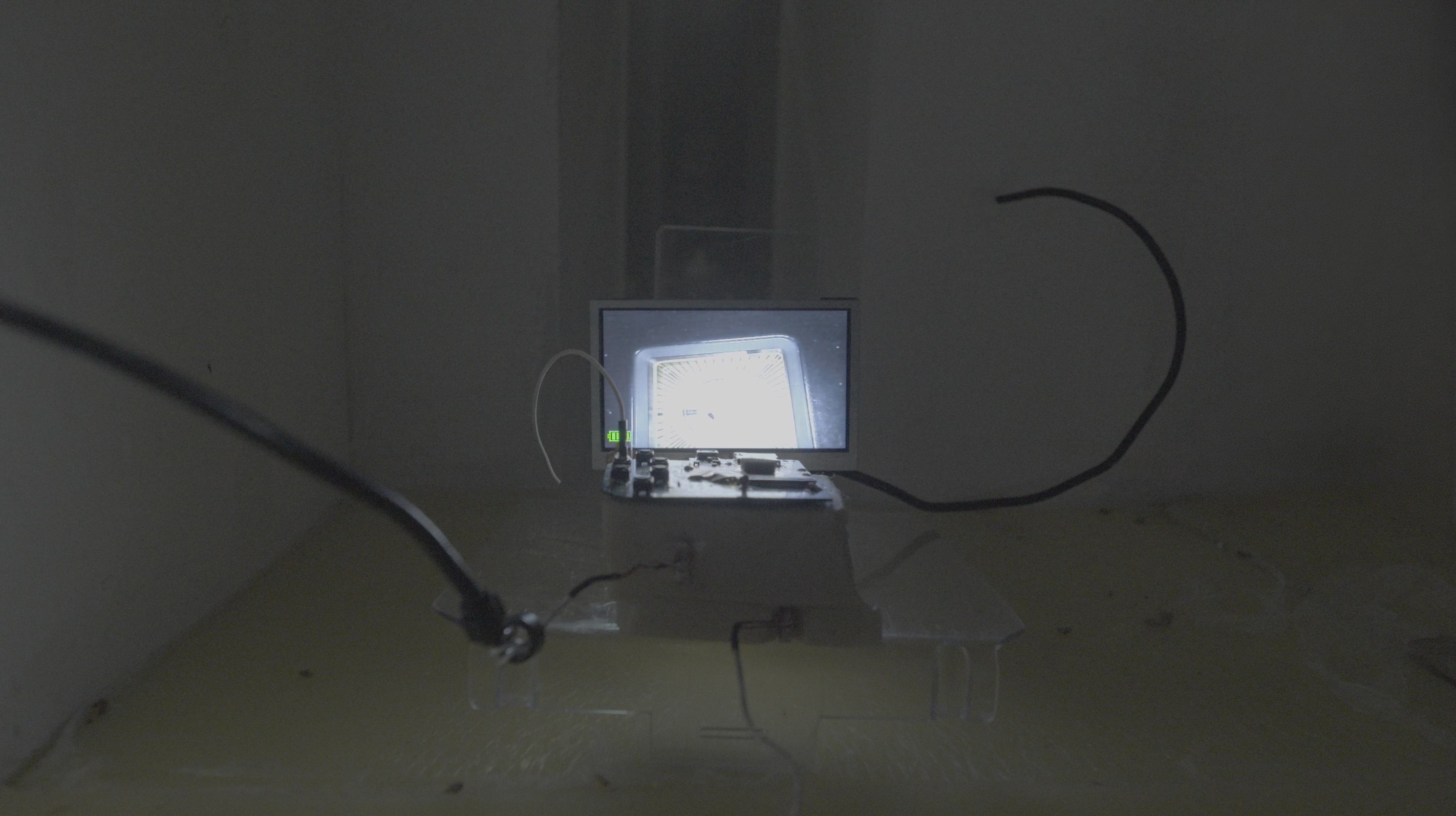
Exhibition view, Office for Unusable Ideas, 2025, detail
Spatial Installation, Performance, Live-Stream, Video, Game
The installation comprises nested built rooms, a small stage within a large stage; peepholes; a sofa and a room inside the sofa; a cat flap; a plush rabbit with a camera behind its eye; a toilet with a built-in rat trap made of wood, wire, peanut butter, and a smartphone attached to it; a set of dentures; smartphones playing videos; an anime march; a television; a MacBook; a bed; furniture; a refrigerator; meat with an embedded screen; pipes stuffed with meat; maggots; reflections in the flush water; an Instagram account; an external observing person at a computer; sound; a sculpture in a latex costume; an office chair.
The installation contains traps of various kinds. A self-built rat trap, in which a bridge hovers over a toilet and would let the victim drown in it through a tilting mechanism, exposes the narcissistic visual trap of the water in the cistern as at least equally dangerous for the viewer. On the underside of the bridge a smartphone is mounted; in the reflection of its screen an Instagram image is visible. It shows a hashtag scrawled in red felt-tip pen. This hashtag guides the visitor's gaze to an Instagram account. The profile picture shows a rabbit. The same image was posted again and again: an ear with a candle in it, a hand forming a hole.
The gaze is continually led through the exhibition space and jumps from reflection to reflection across the many screens and mirrors. The main room of the installation contains countless small holes behind which flickering smartphone screens appear. One sees cinematic spaces, brightly lit stages, and hands holding smartphones, on which in turn hands with smartphones are visible: a nesting of the image within itself.
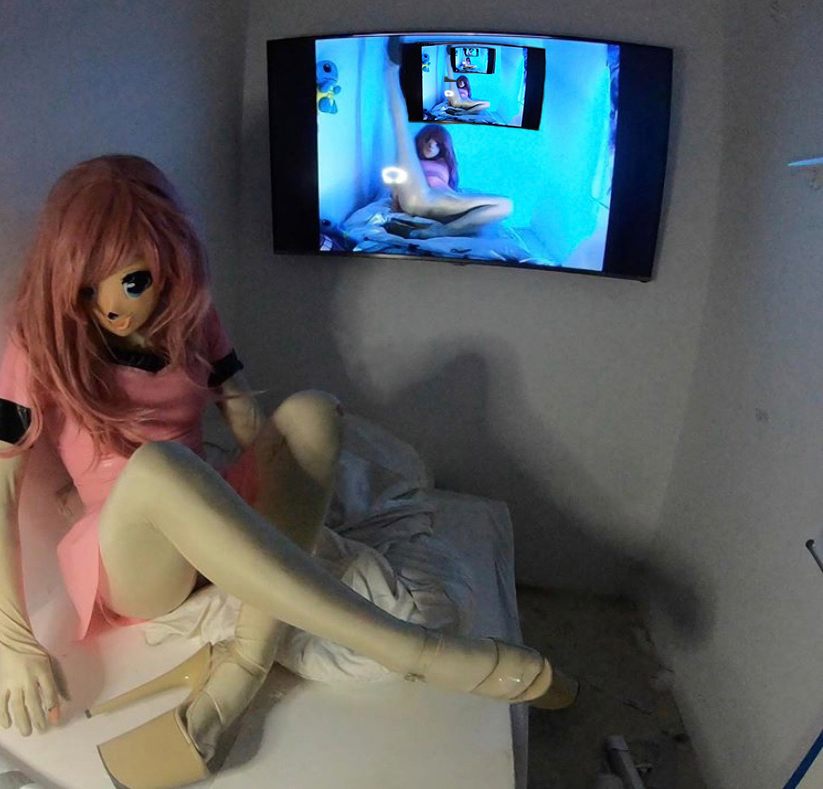
Cursed, exhibition view, sculpture in latex costume
Cursed is laid out as a walk-in system of interlocking rooms, a small stage within a large stage. Whoever enters becomes at once the one seeing and the one seen. Peepholes invite looking through and make the act of looking itself visible; the sofa opens an interior, a crater through which one looks while another gaze returns. Through the cat flap an animal comes and goes, a Wonderland clock-creature that marks the fragmented time of the installation.
Movement through the space is a movement of the gaze: from mirror to reflection, from screen to screen, from the toilet with its water to that outermost plateau where there is no more light, because the room has absorbed it. Through the camera in the rabbit's eye and the live stream, the events are carried outward; an external person observes at a computer, and the visitors in turn enter the stream and the Instagram account. A disorientation arises between the virtual and the physical, in which the boundary between inside and outside, here and there, becomes permeable.
Cursed was conceived as a viral presence on the internet that manifests in artificial intelligence, for example in the form of the online persona Ashley. At the center of the work stands the creation of the figure Ashley and her virtual replicas: avatars without subjecthood, endlessly mirrored within nested image spaces. A narrative unfolds about the traps of seeing, the desire for images, and their manipulative potential. The work is not interested in depicting reality, but in the construction of reality through the act of seeing itself. The installation negotiates how digital reproduction fragments identity and asks: who is actually observing, and who is being seen?
Cursed, camera still
Multimedia Installation, Apple Thorne Project, Berlin, 2022
For No Reason (2022) is a multimedia installation made for the site-specific exhibition series Apple Thorne Project in a billiard hall in Berlin Mitte. A staircase leads from the entrance to upper rooms where monitors show the real-time feed of the surveillance camera at the entrance. Through manipulation of the surveillance system, staged fake footage of a fight, performed in the entrance hall a few days earlier for the exhibition, was mixed into the real feed, so that on the day of the exhibition the scene appeared to be happening live on the ground floor. Despite believing it was real, most visitors did not intervene, and those who went down felt the scene had only just ended. Relying not on actual presence but on the spread of a rumor, the work stages the tension between hyperreality and reality and lets the order of the image intrude, like a breaking of the fourth wall, into the order of the real.
2019 Bachelor of Fine Arts, Hochschule für Bildende Künste (HFBK), Hamburg
2017/2018 Studies at the San Francisco Art Institute (SFAI), San Francisco, CA
2024 Wednesdays, el-project, Berlin
2020 There Is A Call Coming From Inside The House, EGO, Düsseldorf
2019 Simultanprojekte, Simultanhalle, Cologne
2017 Sophie Schweighart, MOM Artspace, Hamburg
2017 Sophie Schweighart - Das Helle Zimmer, Overbeck-Gesellschaft, Kunstverein Lübeck, Lübeck
2016 Gestundet, Büro für Brauchbarkeit, Cologne
2016 HFBK Hugs, Art School Alliance, Hamburg
2015 Ausstellungsreihe Folgendes, Galerie der HFBK, Hamburg
2015 Max Ernst Stipendium, Max Ernst Museum des LVR, Brühl
2014 Spiritus, GAGA MIKI SHOW, Goldener Pudel, Hamburg
2026 Nouveaux Deux Deux, Art Düsseldorf, Düsseldorf
2026 Don’t Trust The Rabbit, OffSpace Sparkasse, Düsseldorf
2025 EN HIVER, Nouveauxdeuxdeux, Munich
2025 Don’t You Believe In Your Own Ghost, Acud Galerie, Berlin
2025 Heterotopische Gesänge, Kunstverein Gera, Gera
2025 And Again How Something And So On Was Or Is, Kunsthaus Bethanien, Berlin
2025 Düsseldorf and Photography, Paris Photo 2025
2024 ESCAPISMUS, Kaugummi On Motherboard, Erratum Gallery, Berlin
2023 As Pamela C. Rucker: DAINTY, Sprink, Düsseldorf
2023 Kunstakademie Düsseldorf X Julia Stoschek Foundation, Düsseldorf
2022 Viva Forever, Sprink, Düsseldorf
2022 The House That Mum Built, Santos, London
2022 2 Zimmer, Küche, Bad, A+ Galerie, Berlin
2022 Apple-Thorne-Project II, Site-Specific Project, Berlin
2021 Transplantation, Nails Projectroom, Düsseldorf (Duo)
2021 Apple-Thorne-Project I, Site-Specific Project, Berlin
2021 Vibritionalnetwork, Künstlerhaus Faktor, Hamburg
2019 Berlin Masters, Kühlhaus, Berlin
2018 Ciao! Strizzi, Cologne
2018 CO/LAB III Los Angeles-Berlin Cooperation, Torrance Art Museum, CA
2017 Diego Rivera Gallery, San Francisco, CA
2017 Jahresgaben, Overbeck-Gesellschaft, Kunstverein Lübeck, Lübeck
2016 Schweighart / Münchenhagen, Galerie Öhl-Früh, Hamburg (Duo)
2016 HISCOX Kunstpreis Nominees, Kunsthaus Hamburg, Hamburg
2016 Freiheit, Gleichheit, Brüderlichkeit, Tom of Finland, Elektrohaus, Hamburg
2015 Feeding The World, Feeding The Mind, EXPO Milano, Mailand
2015 Be Water My Friend, Westwerk, Hamburg
2014 Kunsthoch 46, Raumlabor, Braunschweig
2025 Bundeskunstpreis für Kunststudierende (Short List), Kunsthalle Bonn
2024 Förderpreis für Künstlerinnen und Künstler (Short List), MKW NRW
2022 Auf geht’s Stipendium, Ministerium für Kultur und Wissenschaft NRW
2021 Auf geht’s Stipendium, Ministerium für Kultur und Wissenschaft NRW
2019 TOY Berlin Masters Award (Short List), Berlin Masters Foundation
2017 ASA Art School Alliance, Alfred Töpfer Stiftung F.V.S., Hamburg
2016 HISCOX Kunstpreis (Short List), HISCOX, Hamburg
2015 Max-Ernst-Preis, Max Ernst Museum des LVR, Brühl
2015 Cusanuswerk Stipendium, Bundesministerium für Bildung und Forschung
2011 Heidi-Kleber-Preis, Heidi-Kleber-Stiftung, Munich
2025 Publikation, Heterotopische Gesänge, Kunstverein Gera
2022 cc_phos magazine #2
2019 Absolventenausstellung HFBK (catalogue)
2017 Gegenwartsbewältigung, Galerie der HFBK, Hamburg
2016 HISCOX Kunstpreis (catalogue)
2015 Folgendes, Sophie Schweighart, Galerie der HFBK, Hamburg (catalogue)
2014 Der Greif #7, Simon Karlstetter, Augsburg (magazine)
schweighartsophie.com
@sophieschweighart