Spatial Installation, Kunstakademie Düsseldorf
Office for Unusable Ideas is a long-term artistic and scientific project that takes the form of an immersive, walk-in spatial installation. The work consists of several interconnected rooms that form a fictional office-laboratory. At its center is the investigation of biohybrid systems in which living human iPSC neurons on a multi-electrode array are used as a biological computing element.
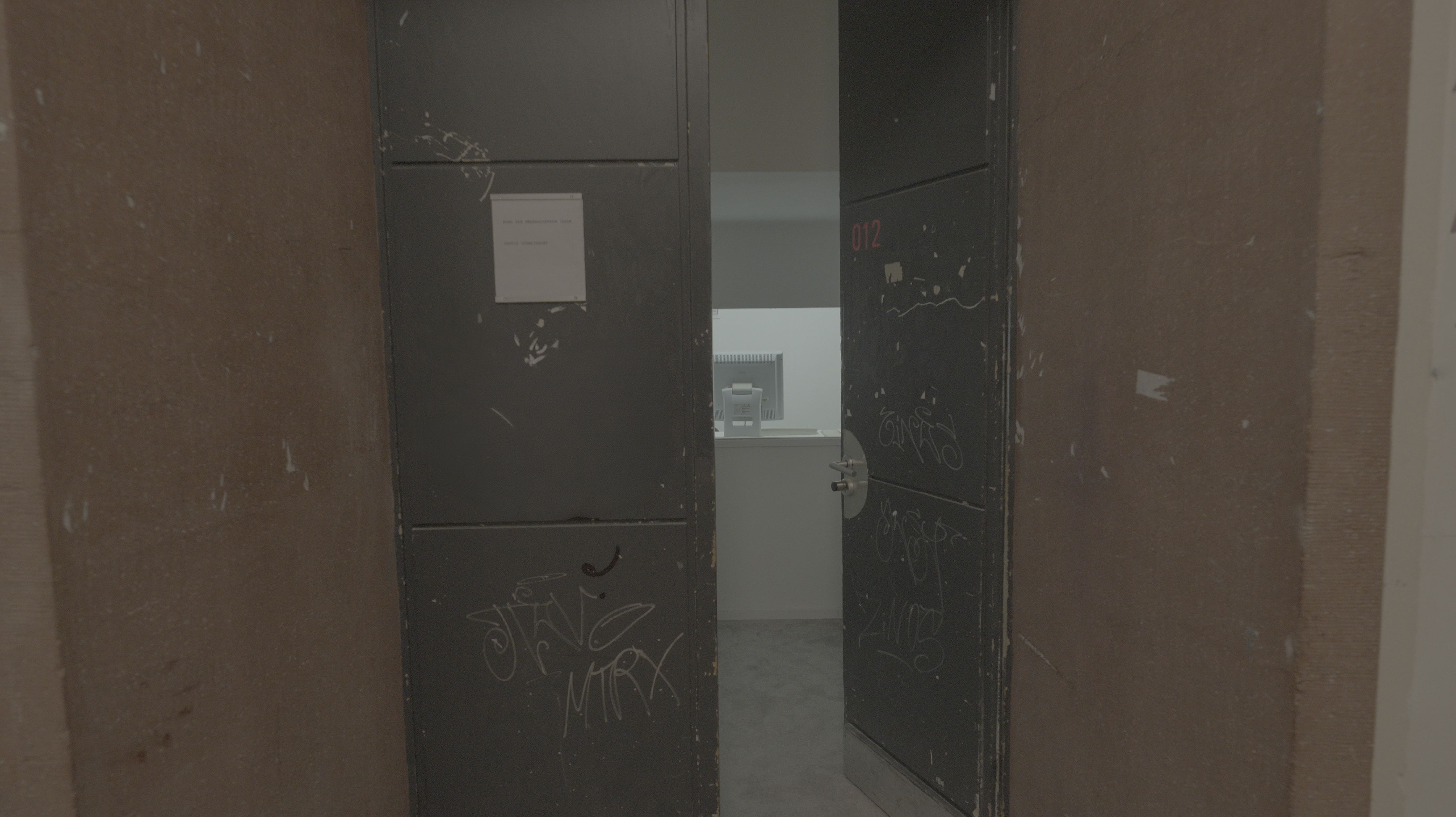
Exhibition view, Office for Unusable Ideas, 2025, original version of the installation, Kunstakademie Düsseldorf, Room 012
The first version of the project (Delphi 1) was realized and shown in July 2025 as part of the graduation exhibition of the Kunstakademie Düsseldorf. In this speculative version, the CO₂ incubator and the MEA system were already present as central sculptural elements. The work was awarded the Bergischer Kunstpreis 2025 and will be exhibited institutionally in September 2025.
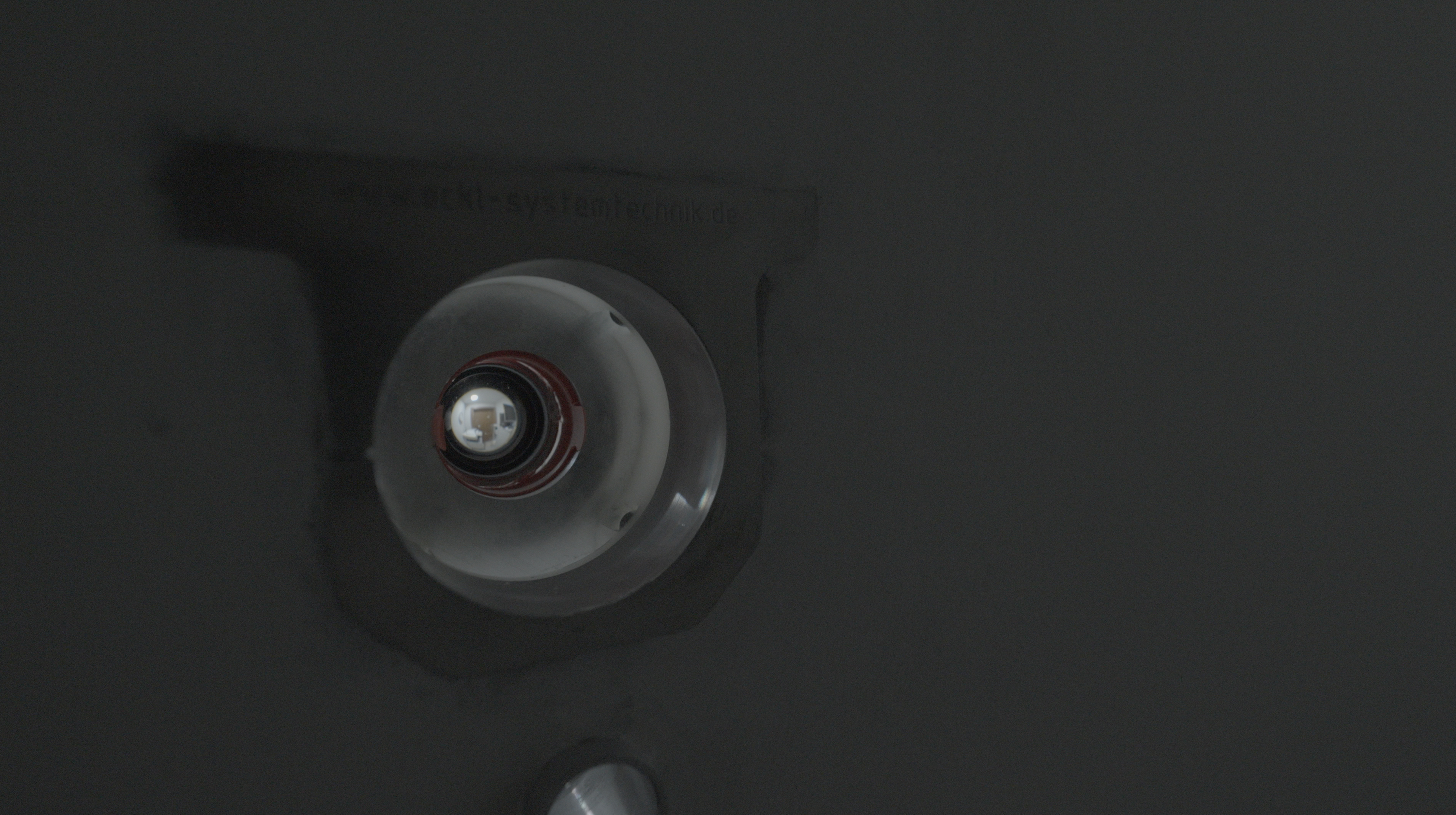
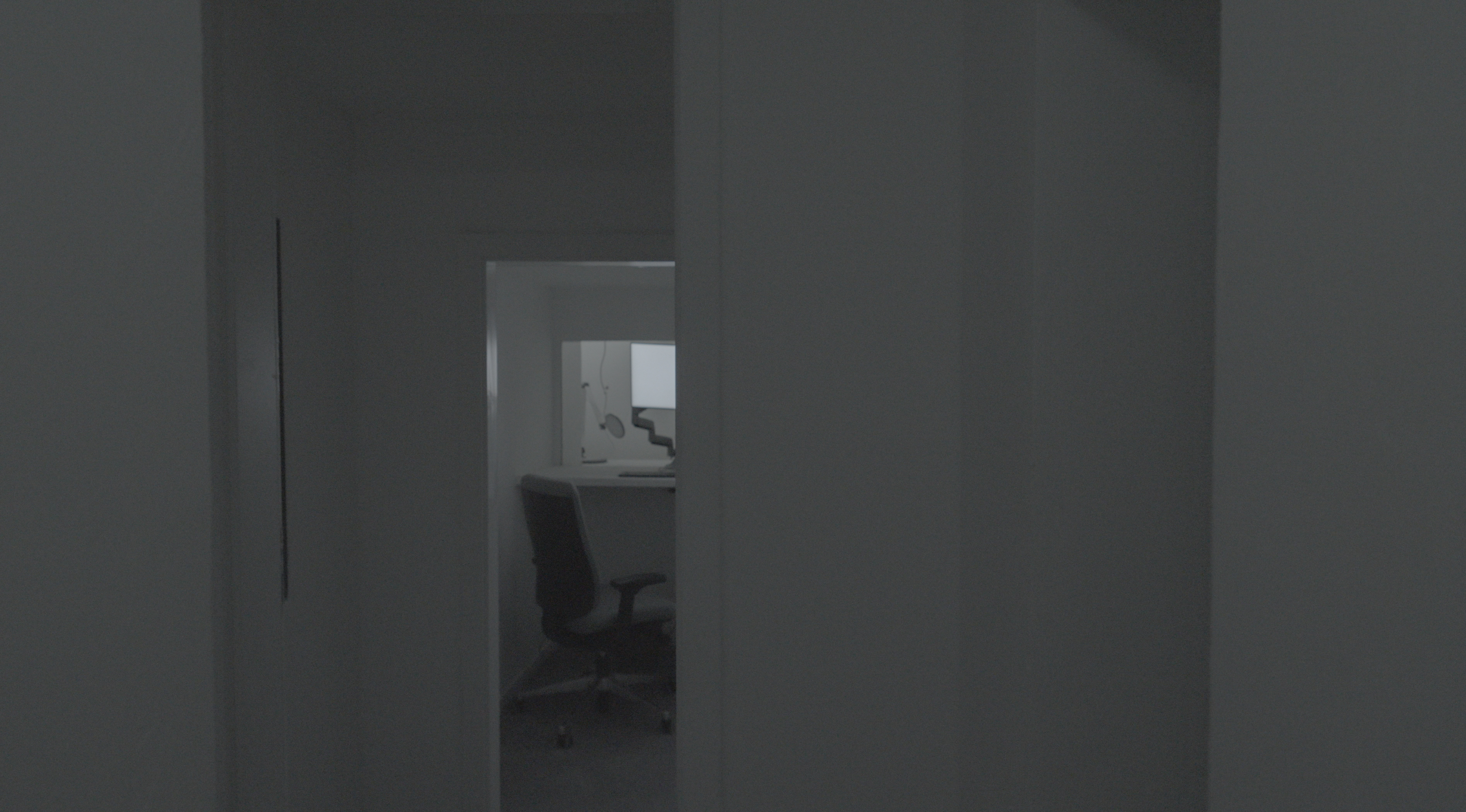
On entering the installation, a labyrinthine, distorted office opens up. At first glance the architecture seems familiar, yet it quickly proves disorienting and unpredictable. Rooms are nested within one another, and dimensions and proportions are hard to gauge. Long corridors lead into narrow passages, and bright zones give way abruptly to dark chambers. Capsules embedded in the walls hold diaries, notes, and personal documents that can be seen only through small peepholes and so remain out of reach.
Exhibition view, Office for Unusable Ideas, 2025, detail, peephole
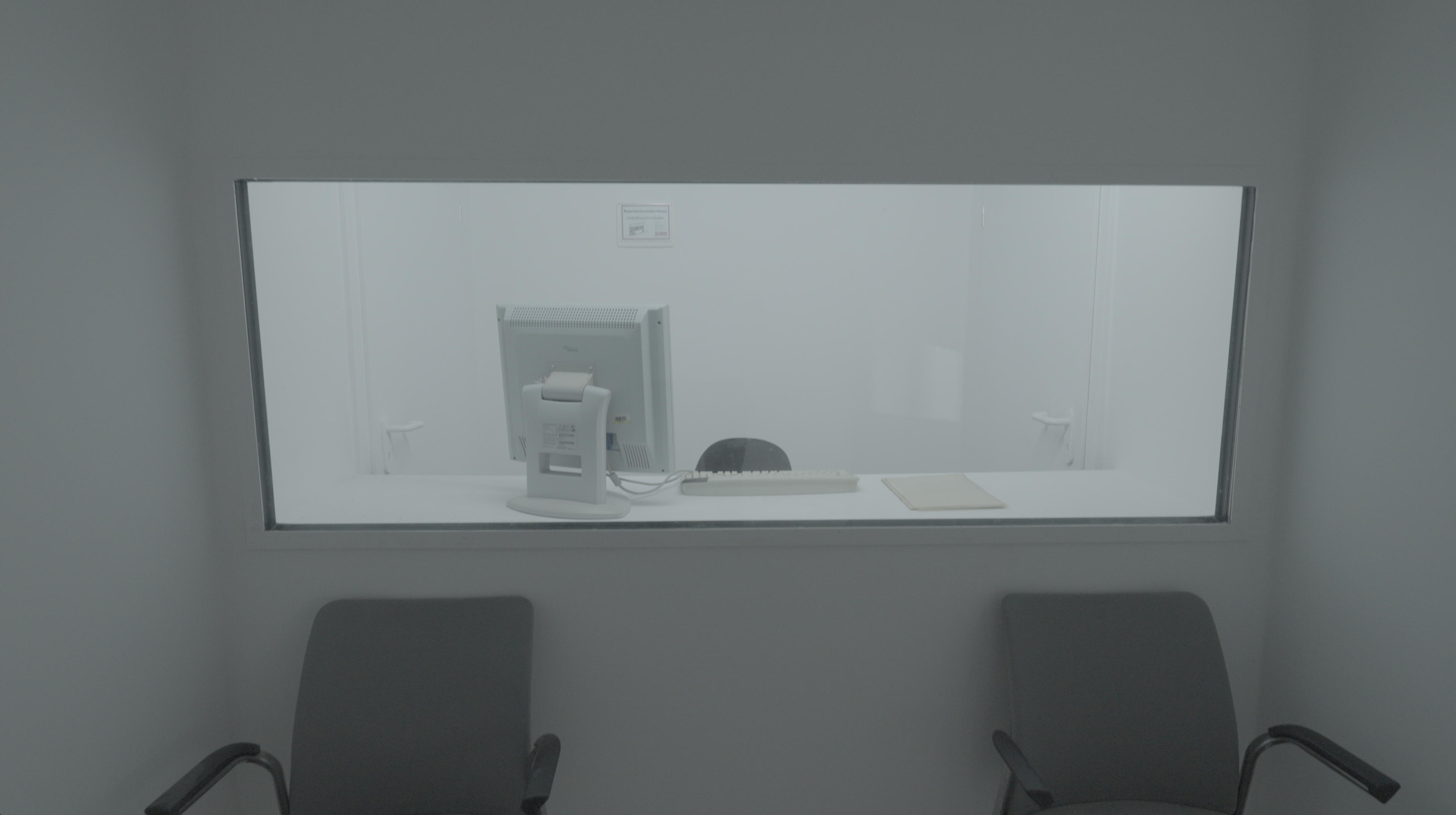
At the end of a corridor, behind glass, stands "The Core," a purpose-built electronics cabinet in which all the cables converge. Here lies the heart of the installation: the self-developed control system Delphi. Trained on the personal correspondence, diaries, and archives of a deceased, absent person, Delphi functions as an affective mind-clone, a grief bot that seeks to hold onto a consciousness in a state of utmost mental clarity; the work is rooted in the biographical experience of dementia and loss of identity within the artist's own circle. From the Core, the entire office is wired. Delphi's responses appear not only on the monitor but materialize in the space itself: in flickering lamps, in the irregular dripping patterns of two faucets, and in brief pulses of light. The temporal intervals consistently follow Morse-code structures.
Moving through the installation corresponds to a journey through the layers of a program. Through a hatch in the office wall one enters a dark, earth-filled room, and from there, through a door, a narrow corridor that leads into an inner, almost sacral dark room. In the adjacent area stands the CO₂ incubator with "The Brain," a multi-electrode array that is visible only indirectly, through an endoscope camera. Through this architecture Delphi is given a body, and the office becomes the physical embodiment of the digital system. The human appears as an enclosed, bygone residue, while machine and organic extension are the active voices.
Exhibition view, Office for Unusable Ideas, 2025, detail
Exhibition view, Office for Unusable Ideas, 2025, detail
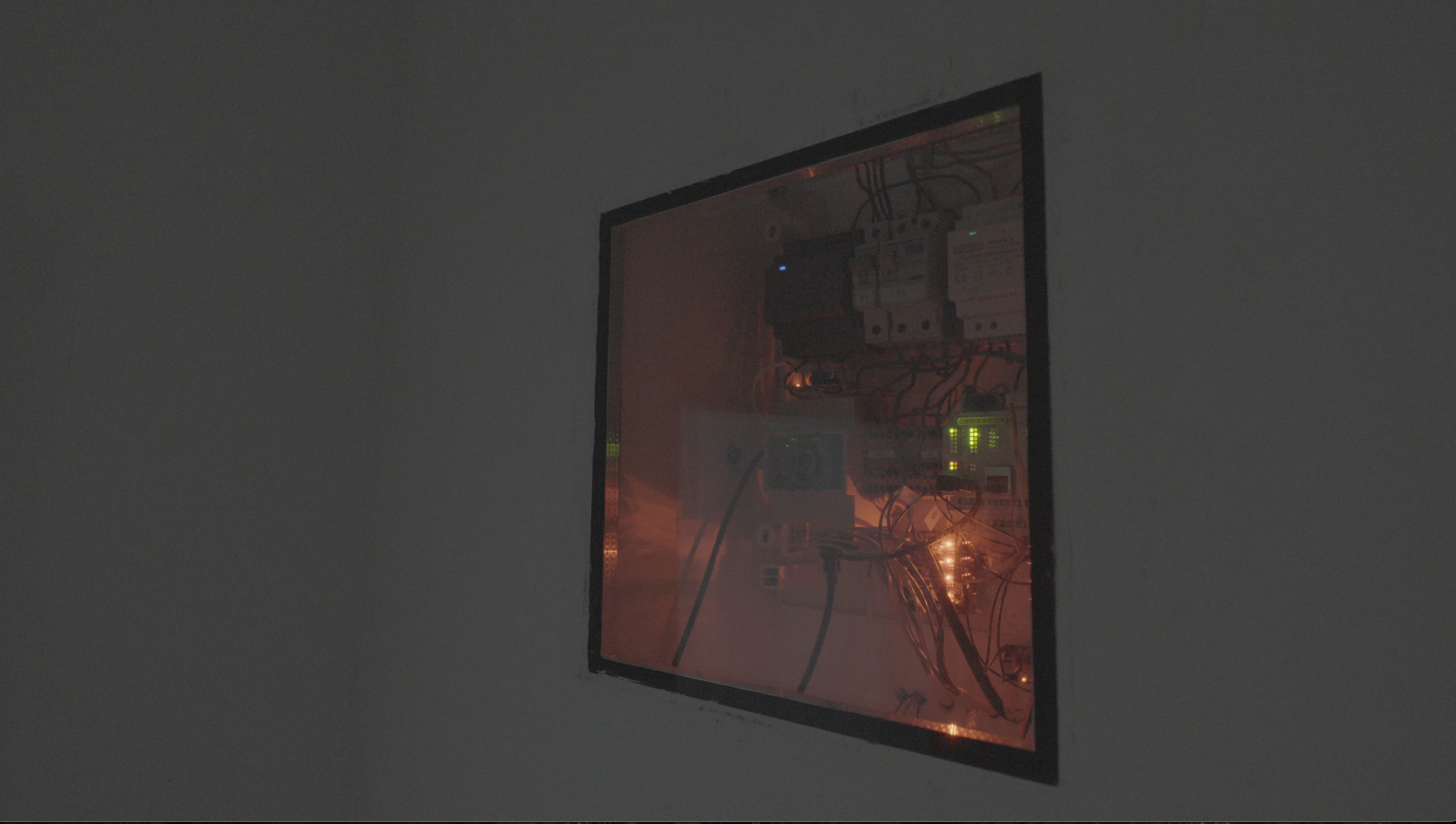
Exhibition view, Office for Unusable Ideas, 2025, detail
Sensors in the space continuously capture data such as movement, light, sound, and visitor interaction. This data is processed by Delphi and converted into electrical stimulation patterns that are sent through an STG stimulus generator to the MEA plate. The neuronal network processes the signals in a natural, chaotic way. The resulting activity is read out in real time and flows back into Delphi, and on the basis of this biological response the system drives physical elements in the space. In this way a genuine closed feedback loop emerges between visitor, digital control, and living biological material.
The project addresses the dissolution and reconstruction of identity, the instrumentalization of living material as a computing resource, and the ethical questions that arise when biological systems become computers. Work is currently underway on the next development stage (Delphi 2), which envisions the real integration of living neuronal networks into a stable biohybrid closed-loop system.
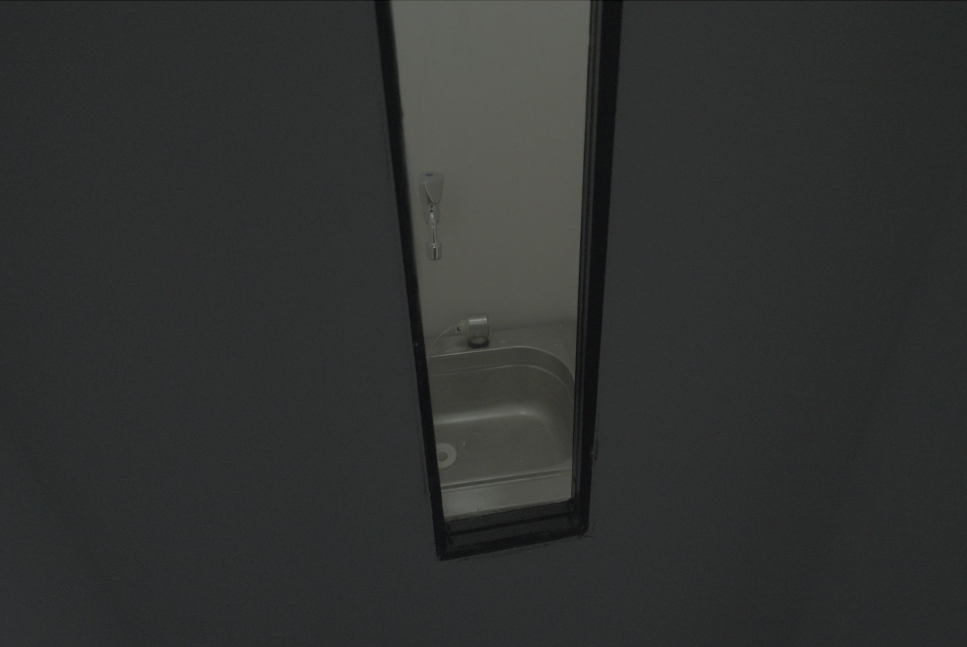
Exhibition view, Office for Unusable Ideas, 2025, detail
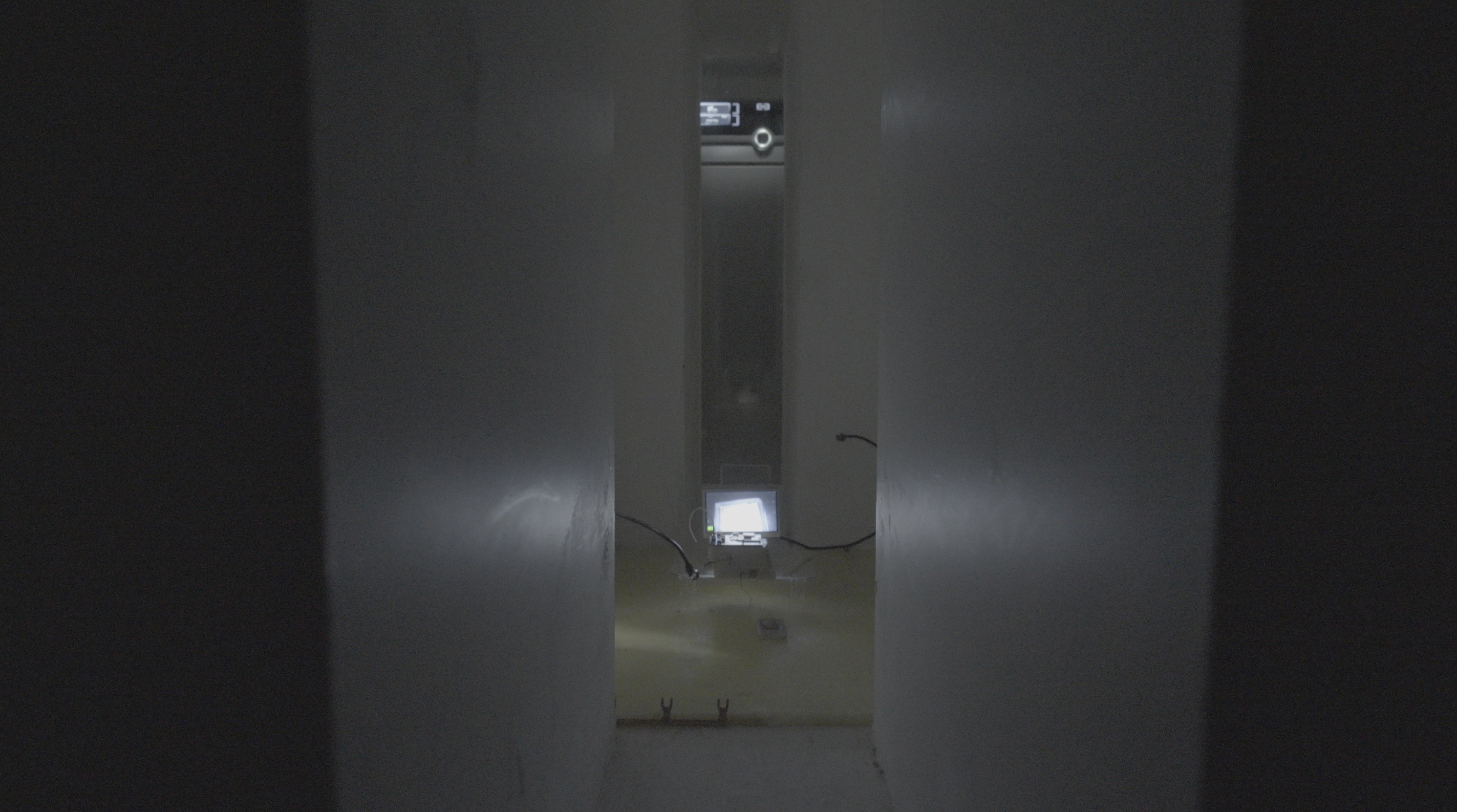
Exhibition view, Office for Unusable Ideas, 2025, detail
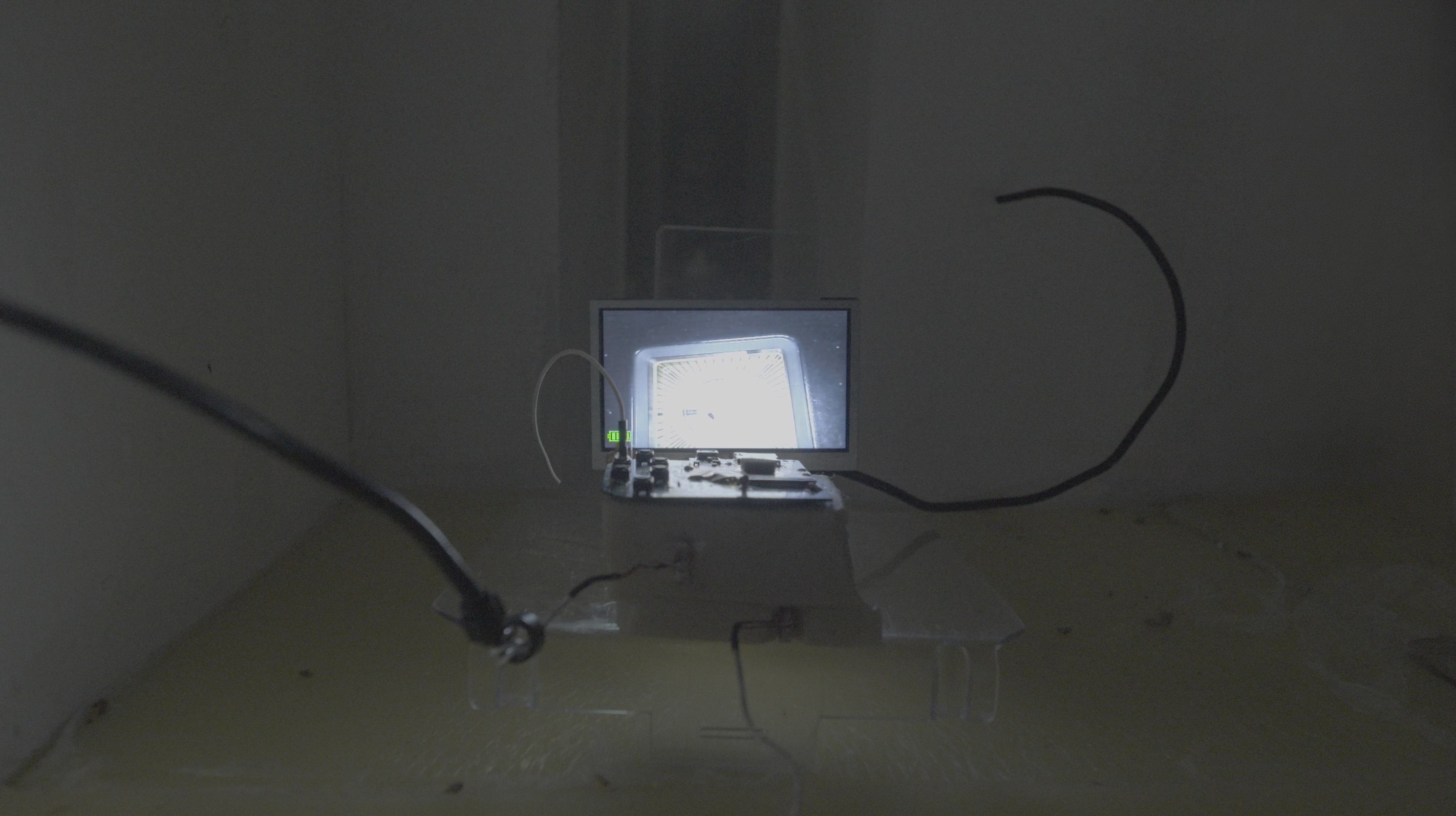
Exhibition view, Office for Unusable Ideas, 2025, detail